


'/%3e%3c/svg%3e)

- By Indication
 Inflammatory and Autoimmune DiseasesRespiratory DiseasesInfectious DiseasesRare DiseaseGut Microbiota Research ServiceBy Modality
 Preclinical Model Strategies for T-Cell Engagers: From Oncology to Autoimmune Disease
 2026-10-27
 11:00 AM ET
 Dr. Wanjun Yuan & Dr. Haiqiao SunOne TCE Modality. Two Disease Contexts. Different Preclinical Questions.

'/%3e%3c/svg%3e)
'/%3e%3c/svg%3e)

Oncology
Development of Osimertinib Resistant Mouse Models for Preclinical Evaluation
 2025-05-01

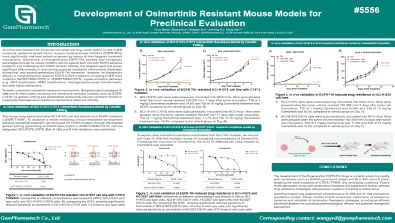

As a first-line treatment for advanced non-small cell lung cancer (NSCLC) with EGFR mutations, epidermal growth factor receptor tyrosine kinase inhibitors (EGFR-TKIs) have significantly improved patient prognosis by means of their targeted treatment mechanisms. Osimertinib, a third-generation EGFR-TKI, exhibits dual therapeutic advantages through its robust inhibitory activity against both common EGFR-sensitive mutations and challenging rare EGFR variants. Notably, this targeted agent has shown significant effectiveness in overcoming acquired resistance mechanisms developed during first- and second-generation EGFR-TKI therapies. However, its therapeutic efficacy is compromised by acquired EGFR-C797S mutations (including EGFR triple mutations Del19/T790M/C797S or L858R/T790M/C797S), bypass activation pathways (e.g., MET amplification, HER2 amplification), histological/phenotypic transformation, and other latent mechanisms.
Recommended for You
More infomation about blogs





Find Models


Submit Inquiry
Contact Us
Schedule a Meeting
Let us know which event you're attending and we'd be happy to connect with you.
Download
Download
Watch On-Demand Webinar
Newsletter Signup

We value your privacy
This website will store cookies on your computer. These cookies are used to collect information about how you interact with this website and enable us to remember you. We use this information to improve and customize your browsing experience, as well as to analyze and collect relevant data and metrics about visitors on this website and other platforms. For more information about the cookies we use, please refer to our privacy policy
If you decline, your information will not be tracked when visiting this website. A cookie will be used in your browser to remember your preference settings that you have not accepted.