


- By Indication
 Inflammatory and Autoimmune DiseasesRespiratory DiseasesInfectious DiseasesRare DiseaseGut Microbiota Research ServiceBy Modality
 Preclinical Model Strategies for T-Cell Engagers: From Oncology to Autoimmune Disease
 2026-10-27
 11:00 AM ET
 Dr. Wanjun Yuan & Dr. Haiqiao SunOne TCE Modality. Two Disease Contexts. Different Preclinical Questions.
'/%3e%3c/svg%3e)

Sjögren’s Syndrome (SS)

Our Advantages

Comprehensive Model Portfolio
We provide a diverse collection of Sjögren’s model types, including spontaneous models and induced models
01
Diverse Animal Models with Distinct Pathogenic Mechanisms
Sjögren’s models exhibit clear and diverse pathogenic mechanisms driven by B cells, T cells, or STING pathway activation, rendering them suitable for preclinical studies targeting distinct drug mechanisms of action (MoAs).
02
Model Library

Case Studies & Validation Data
Salivary gland protein induced SS model
Phenotypic manifestations of salivary gland protein induced SS model

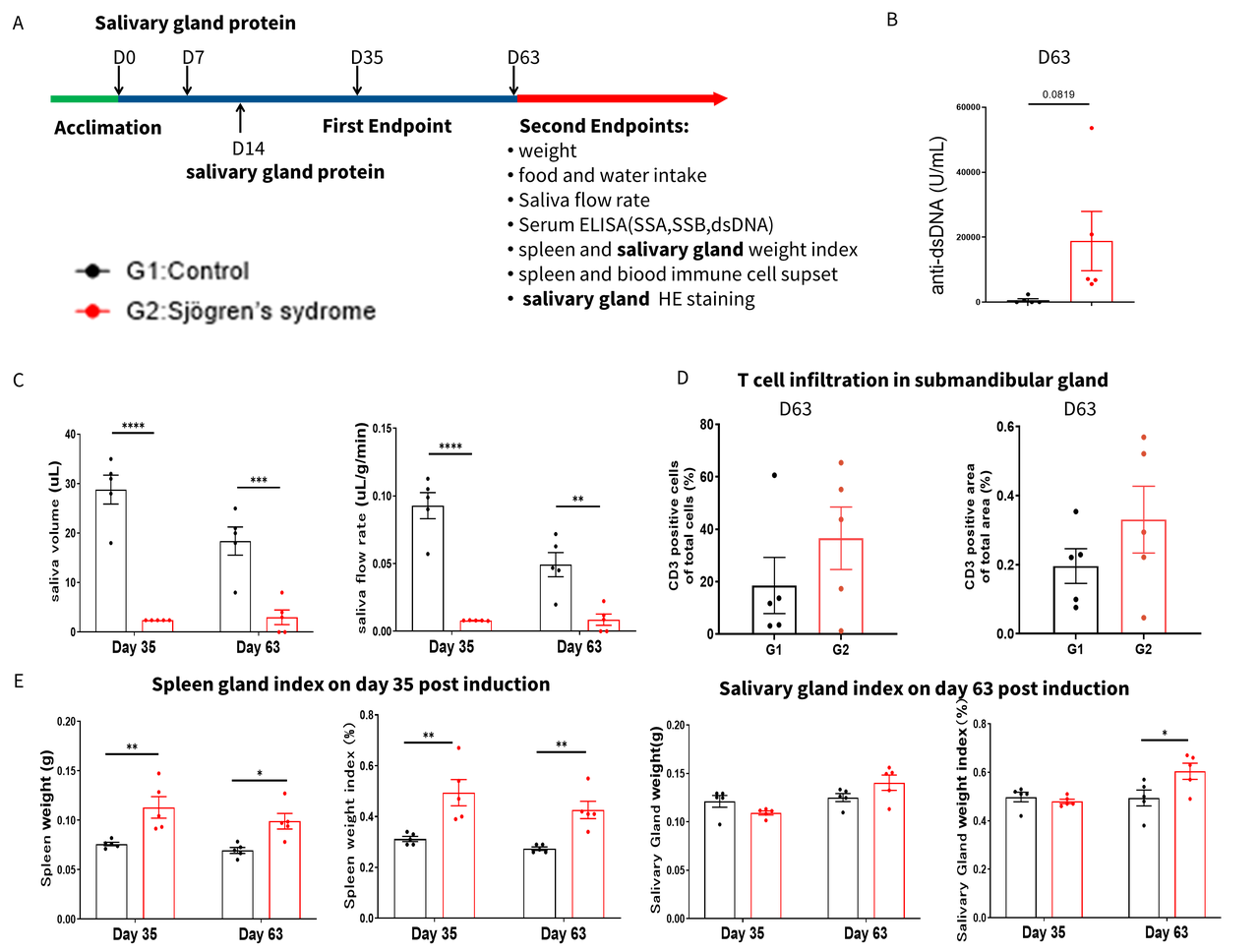
Panel A Study design of the salivary gland protein-induced SS mouse model.
Panel B The level of anti-dsDNA IgG was elevated in the modeling group at the endpoint.
Panel C Salivary volume was reduced in the modeling group.
Panel D T-cell infiltration was increased in the submandibular gland.
Panel E Spleen and salivary gland indices were increased in the modeling group.
Statistical analysis was performed using one‑way ANOVA, and all data are presented as mean ± SEM. *p<0.05, **p<0.01, ***p<0.001,****p<0.0001

STING agonist induced SS model
Phenotypic manifestations of STING agonist induced SS model
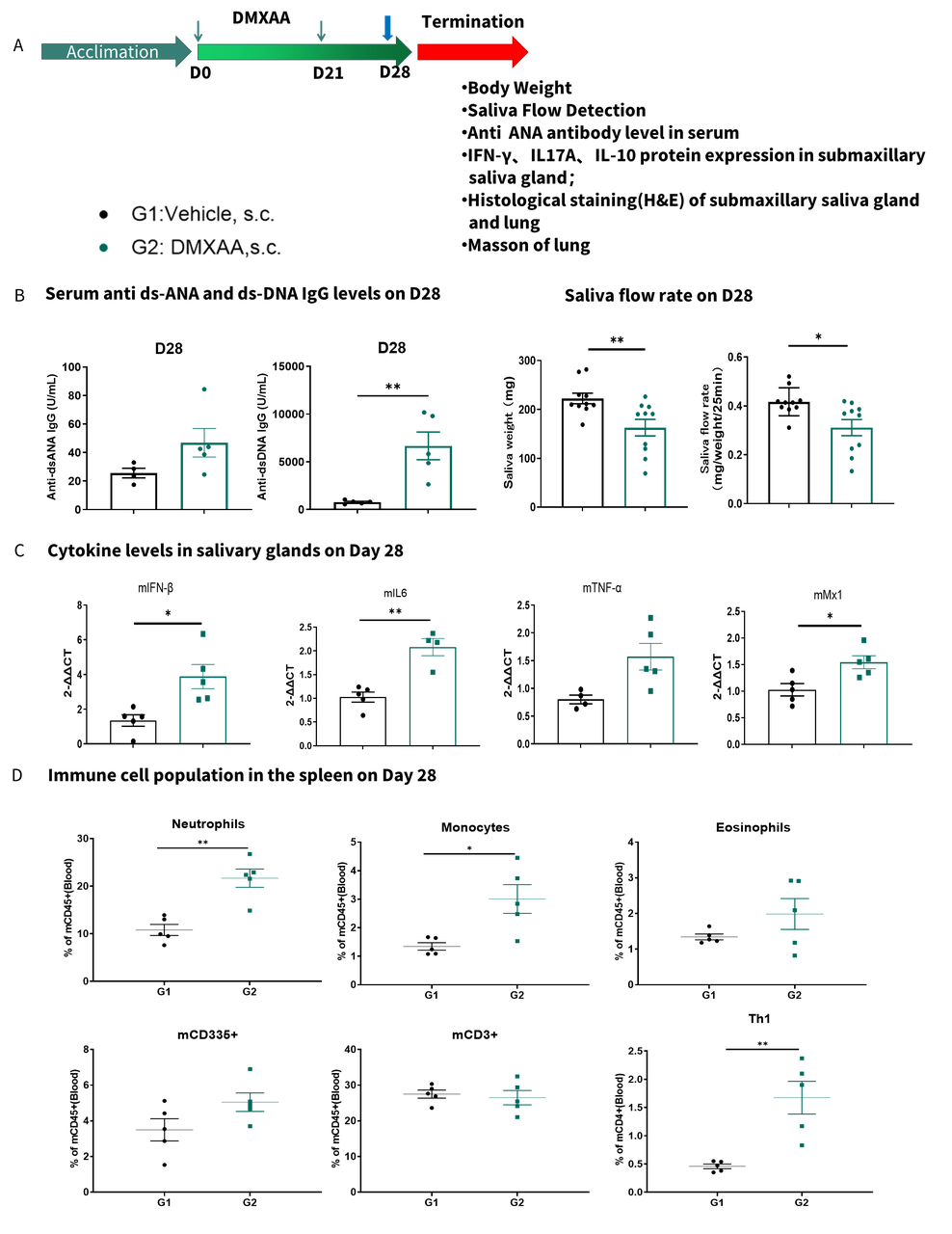
Panel A Study design of STING agonist induced SS model.
Panel B Serum anti-ANA and anti-dsDNA IgG levels were elevated in the model group, while the saliva flow rate was decreased in the model group.
Panel C Cytokine levels of IFN-β, IL-6, TNF-α and Mx1 were elevated in the model group.
Panel D Immune cell populations in the spleen were elevated on Day 28 in the model group.
Statistical analysis was performed using one‑way ANOVA, and all data are presented as mean ± SEM. *p<0.05, **p<0.01
NODShiLtJGpt spontaneous SS mice model
Phenotypic manifestations of NODShiLtJGpt spontaneous SS model
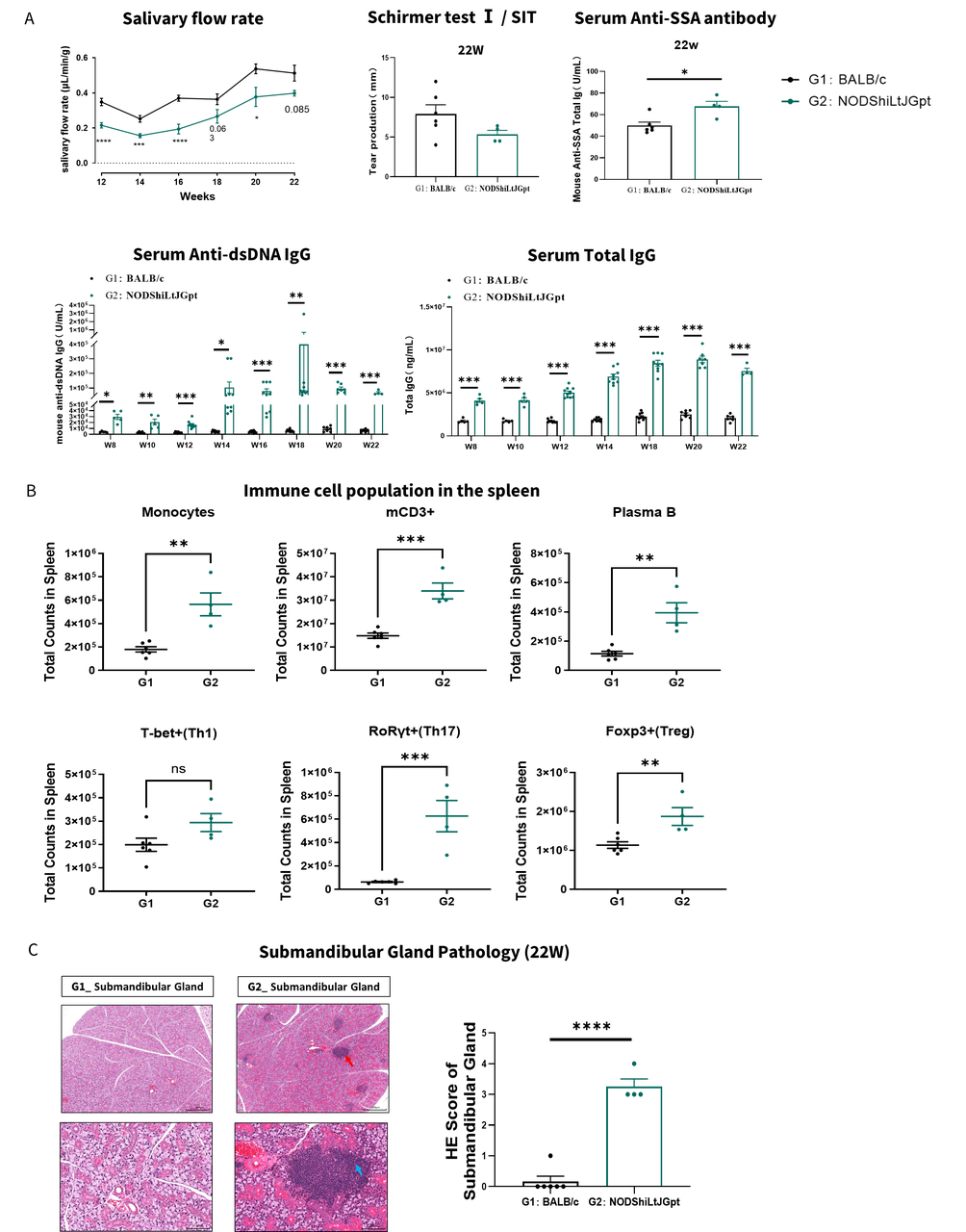
Panel A NOD mice exhibited reduced salivary flow rate and tear production compared with the BALB/c strain. Serum levels of anti-SSA antibody, anti-dsDNA IgG, and total IgG were elevated in NOD mice relative to BALB/c mice.
Panel B Monocytes, CD3⁺ cells, plasma cells, Th1, Th17 and Treg cells were increased in 22-week-old NOD mice compared with BALB/c mice.
Panel C HE histological score of the submandibular gland was increased in 22-week-old NOD mice
Statistical analysis was performed using one‑way ANOVA, and all data are presented as mean ± SEM. *p<0.05, **p<0.01, ***p<0.001,****p<0.0001
All Product Lines


- 1
- 2
- 3
- 4
- 5
- 6
- 42
Recommended for You
Discover related models and services to accelerate your research

Accelerate Your Research
Download



Newsletter Signup


We value your privacy
This website will store cookies on your computer. These cookies are used to collect information about how you interact with this website and enable us to remember you. We use this information to improve and customize your browsing experience, as well as to analyze and collect relevant data and metrics about visitors on this website and other platforms. For more information about the cookies we use, please refer to our privacy policy
If you decline, your information will not be tracked when visiting this website. A cookie will be used in your browser to remember your preference settings that you have not accepted.


Contact Us
Schedule a Meeting
Let us know which event you're attending and we'd be happy to connect with you.