


- By Indication
 Inflammatory and Autoimmune DiseasesRespiratory DiseasesInfectious DiseasesRare DiseaseGut Microbiota Research ServiceBy Modality
 Preclinical Model Strategies for T-Cell Engagers: From Oncology to Autoimmune Disease
 2026-10-27
 11:00 AM ET
 Dr. Wanjun Yuan & Dr. Haiqiao SunOne TCE Modality. Two Disease Contexts. Different Preclinical Questions.
'/%3e%3c/svg%3e)

Osteoporosis

- 2Validated Models
- 50+Studies Completed
Our Advantages
GemPharmatech's core capabilities for preclinical osteoporosis research.

Clinically Relevant Bone-Loss Models
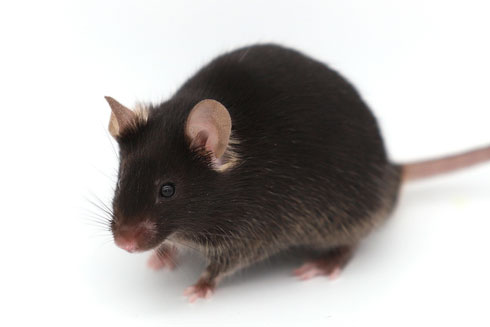
OVX-induced estrogen deficiency in female C57BL/6JGpt mice produces increased body weight, reduced uterine ratio, and trabecular bone loss relevant to postmenopausal osteoporosis.
01
Quantitative Bone Assessment
Micro-CT provide BMD/BMC and trabecular endpoints including BV/TV, Tb.Th, Tb.N, and Tb.Sp, supported by histology of the femur.
02
Human Target–Oriented Application
The B6-hRANKL-Tg + OVX platform supports evaluation of human specific biologic therapies
03
Model Library
Validated models for preclinical osteoporosis bone-loss research .

Case Studies & Validation Data
Explore our studies demonstrating the efficacy of various therapeutic interventions.
OVX-Induced Osteoporosis Mouse Model
OVX-Induced Osteoporosis Mouse Model

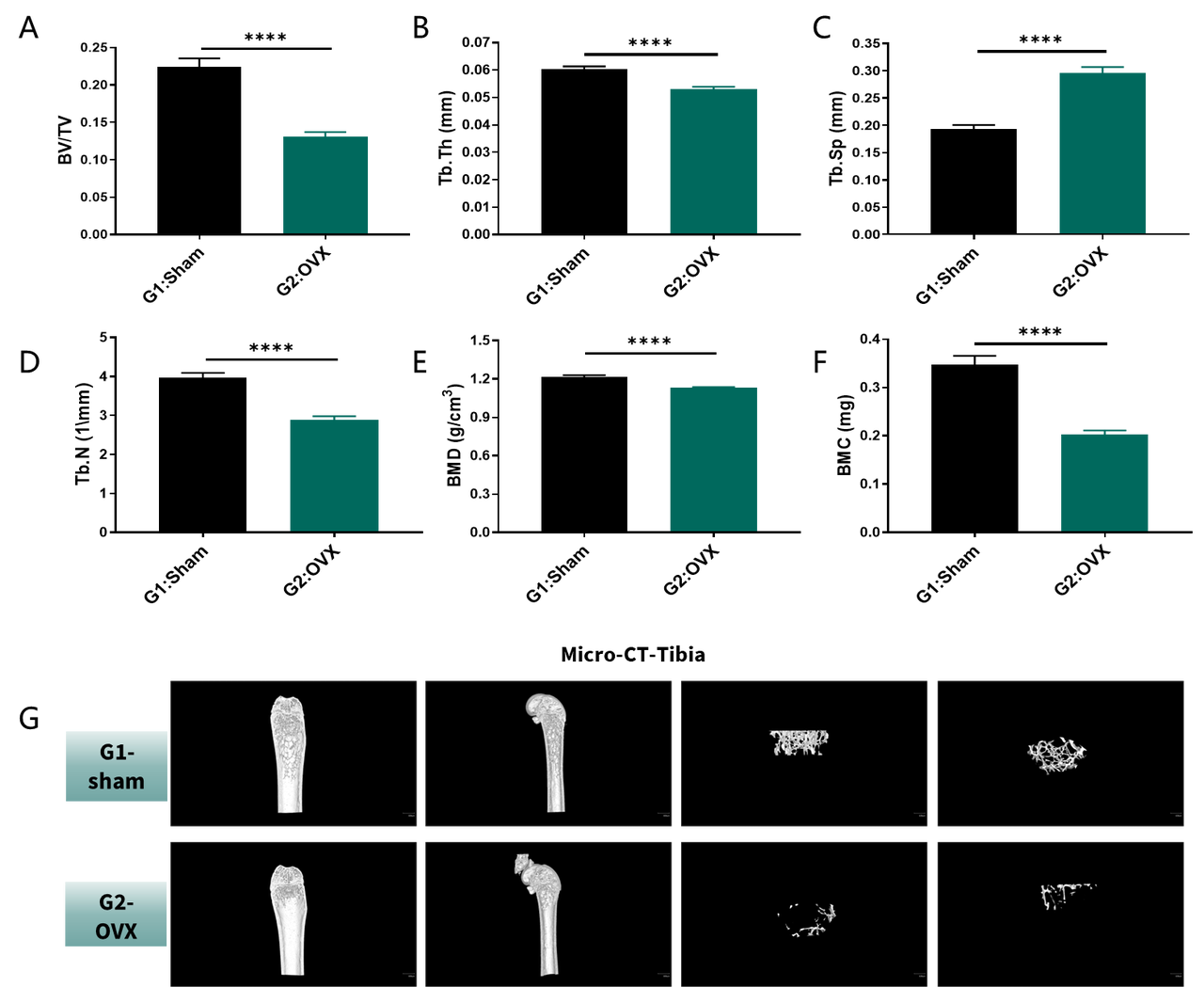
Female C57BL/6JGpt mice were ovariectomized at 8 weeks of age. Ten weeks after surgery, OVX mice showed increased body weight and decreased uterine weight ratio compared with the sham group. Micro-CT analysis of the femur and tibia showed significant reductions in BV/TV, Tb.Th, Tb.N, BMD, and BMC, along with increased Tb.Sp. These results support the establishment of a stable estrogen deficiency-induced bone loss phenotype in this model.
(A) Quantitative analysis of bone volume fraction (BV/TV). (B) Quantitative analysis of trabecular number (Tb.Th). (C) Quantitative analysis of trabecular thickness(Tb.Sp). (D) Quantitative analysis of trabecular separation (Tb.N). (E) Quantitative analysis of bone mineral density (BMD). (F) Quantitative analysis of Bone mineral content (BMC). (G) Representative three-dimensional micro-CT reconstruction images of bone tissues from G1-sham and G2-OVX mice. Compared with the sham group, OVX mice exhibited reduced bone mass, sparse trabecular architecture, impaired trabecular connectivity, and enlarged trabecular spaces, indicating successful induction of osteoporosis-like bone microstructural deterioration after ovariectomy. Data presented as mean ± SEM.

B6-hRANKL-Tg + OVX Osteoporosis Model
B6-hRANKL-Tg + OVX Osteoporosis Model
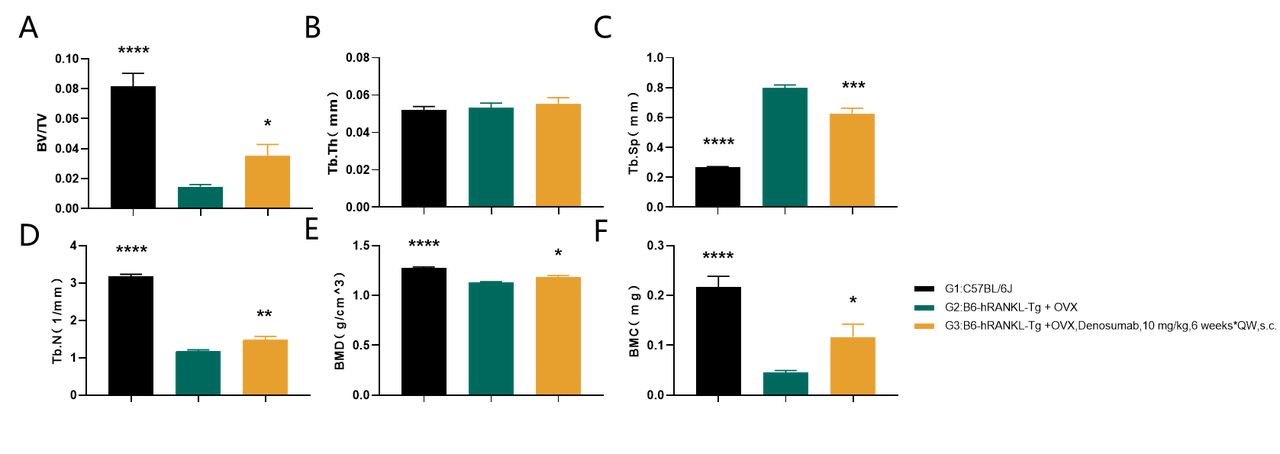 Denosumab treatment increased BV/TV, Tb.N, and BMC and improved Tb.Sp versus model. These data show that the B6-hRANKL-Tg-based osteoporosis platform is responsive to bone-protective intervention and is suitable for evaluation of agents relevant to human RANKL biology.
(A) Quantitative analysis of bone volume fraction (BV/TV). (B) Quantitative analysis of trabecular thickness (Tb.Th). (C) Quantitative analysis of trabecular separation (Tb.Sp). (D) Quantitative analysis of trabecular number (Tb.N). (E) Quantitative analysis of bone mineral density (BMD). (F) Quantitative analysis of Bone mineral content (BMC). Female B6-hRANKL-Tg mice were ovariectomized at 8 weeks of age. After surgery, micro-CT analysis of bone tissues showed that B6-hRANKL-Tg + OVX mice exhibited significant reductions in BV/TV, Tb.N, BMD, and BMC, along with increased Tb.Sp, compared with the control group. These results support the establishment of a stable estrogen deficiency-induced bone loss phenotype in this model. After denosumab intervention, several bone microarchitecture- and bone density-related parameters showed improving trends, suggesting that denosumab may alleviate B6-hRANKL-Tg + OVX-induced bone loss and structural deterioration. Data presented as mean ± SEM.
All Product Lines
Browse our comprehensive catalog of over 30,000 mouse models covering various gene families, signaling pathways, and disease models. Use advanced filters to find the perfect model for your research.


- 1
- 2
- 3
- 4
- 5
- 6
- 12
Recommended for You
Discover related models and services to accelerate your research

Accelerate Your Research
Download



Newsletter Signup


We value your privacy
This website will store cookies on your computer. These cookies are used to collect information about how you interact with this website and enable us to remember you. We use this information to improve and customize your browsing experience, as well as to analyze and collect relevant data and metrics about visitors on this website and other platforms. For more information about the cookies we use, please refer to our privacy policy
If you decline, your information will not be tracked when visiting this website. A cookie will be used in your browser to remember your preference settings that you have not accepted.


Contact Us
Schedule a Meeting
Let us know which event you're attending and we'd be happy to connect with you.