


- By Indication
 Inflammatory and Autoimmune DiseasesRespiratory DiseasesInfectious DiseasesRare DiseaseGut Microbiota Research ServiceBy Modality
 Preclinical Model Strategies for T-Cell Engagers: From Oncology to Autoimmune Disease
 2026-10-27
 11:00 AM ET
 Dr. Wanjun Yuan & Dr. Haiqiao SunOne TCE Modality. Two Disease Contexts. Different Preclinical Questions.
'/%3e%3c/svg%3e)

Psoriasis

Our Advantages

Recapitulate Stages of Disease Pathogenesis
GemPharmatech offers two psoriasis mouse models. The IMQ-induced model mimics the innate immune activation characteristic of disease onset, while the cytokine-induced model recapitulates the adaptive immune inflammation driven by core pathogenic factors in patient lesions.
01
Models Aligned with Drug Mechanisms of Action
The IMQ model supports broad-spectrum drug screening across multiple pathways, while the IL-23/TL1A cytokine model is suited to validating upstream IL-23/TL1A monoclonal antibodies and combination regimens. Together, these models help stratify drug target sites and address mechanistic research needs spanning innate immune priming to Th17 axis inhibition.
02
Model Library

Case Studies & Validation Data
IMQ-induced psoriasis model
Phenotypic Characterization and Efficacy Evaluation in the IMQ-Induced Psoriasis Model

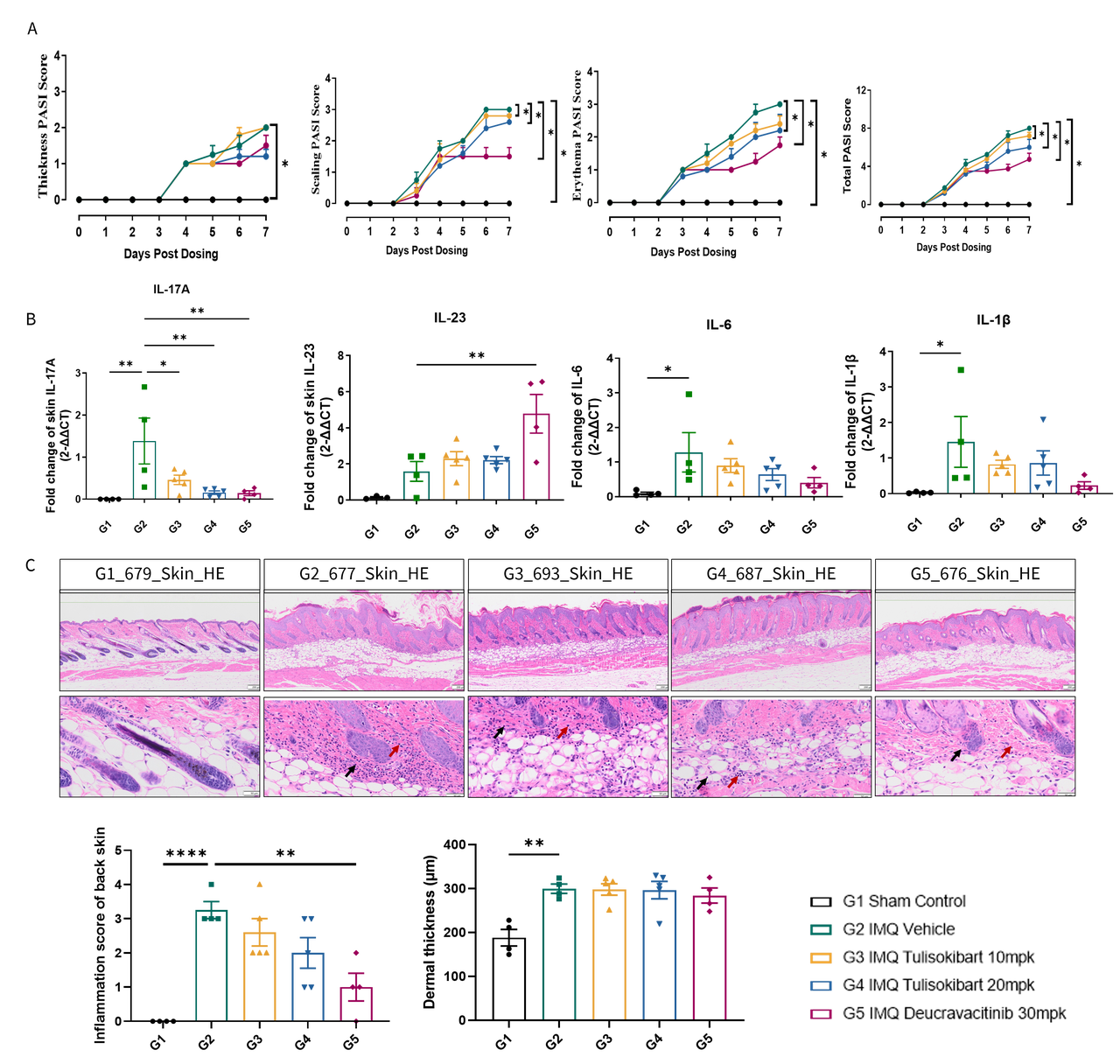
Panel A Thickness, scaling, erythema, and total PASI score were elevated in the IMQ-induced psoriasis model. High dose Tulisokibart (20 mpk) and deucravacitinib significantly alleviated scaling, erythema, and total PASI score; low dose Tulisokibart (10 mpk) only reduced scaling and total PASI score.
Panel B The mRNA level of IL-17A in skin tissue was markedly upregulated in the IMQ-induced psoriasis group. Treatment with both 10 mpk or 20 mpk Tulisokibart, as well as deucravacitinib, significantly lowered IL-17A expression. None of the tested drugs exerted a suppressive effect on IL-6 or IL-1β.
Panel C Representative H&E staining images. Lymphocytes (dark red arrows); neutrophils (black arrows). Scale bars: 200 μm (top row), 50 μm (bottom row). Quantitative analysis revealed that the IMQ psoriasis model exhibited significantly higher skin inflammatory scores and greater dermal thickness compared to control. Deucravacitinib treatment markedly reduced both indicators.
Statistical analysis was performed using one‑way ANOVA, and all data is presented as mean ± SEM. *p<0.05, **p<0.01, ***p<0.001, ****p<0.0001
Efficacy Study in IMQ-induced Psoriasis in BALB/c-hIL17A/hIL17F mice.
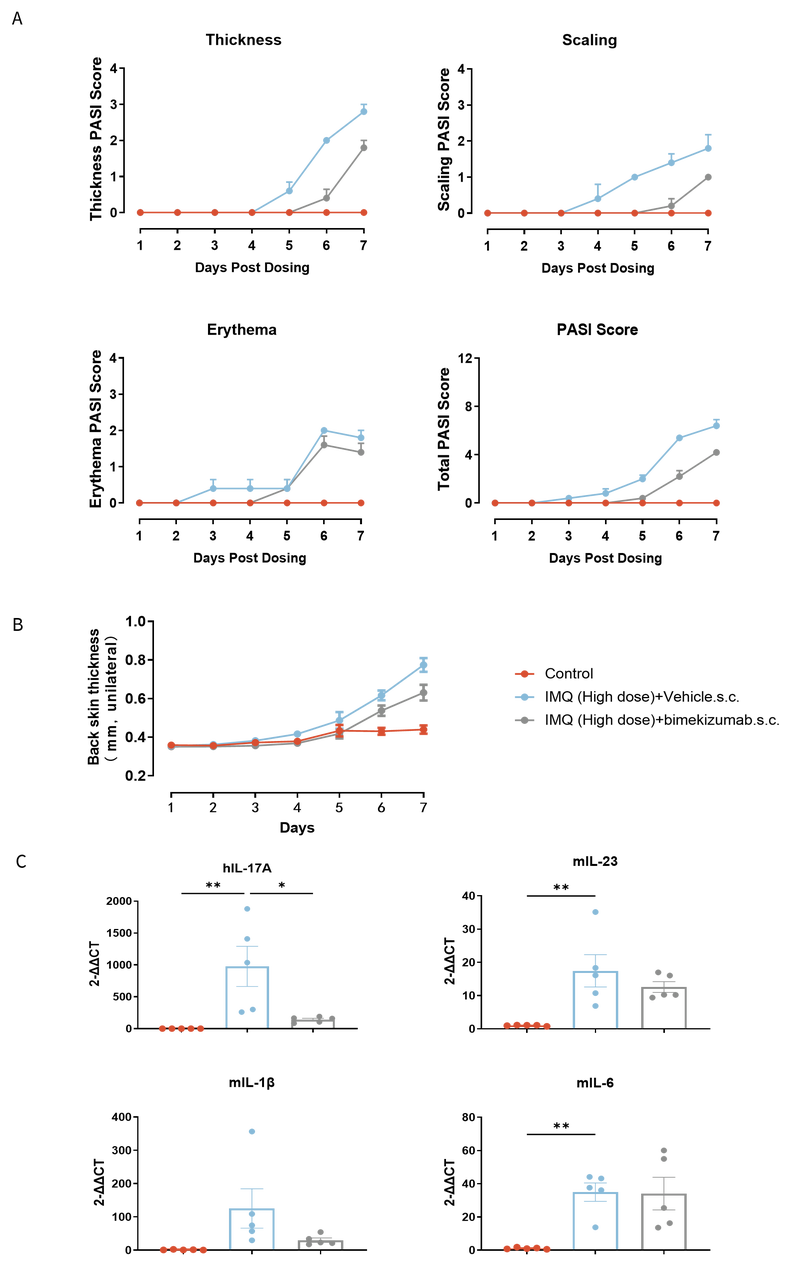
Panel A Bimekizumab treatment decreased skin thickness, scaling, erythema, and total PASI score in IMQ-induced psoriasis in BALB/c-hIL17A/hIL17F mice.
Panel B Bimekizumab treatment alleviated epidermal/dermal thickness.
Panel C mRNA expression of hIL17A, mIL-23 and IL-6 was markedly upregulated in the IMQ-treated BALB/c-hIL17A/hIL17F psoriasis group. Bimekizumab significantly suppressed hIL17A transcript levels.
Statistical analysis was performed using one‑way ANOVA, and all data is presented as mean ± SEM. *p<0.05, **p<0.01.

Human Recombinant Cytokine-induced Psoriasis Model
Phenotypic Characterization and Efficacy Evaluation of human IL23 and TL1A-induced Psoriasis
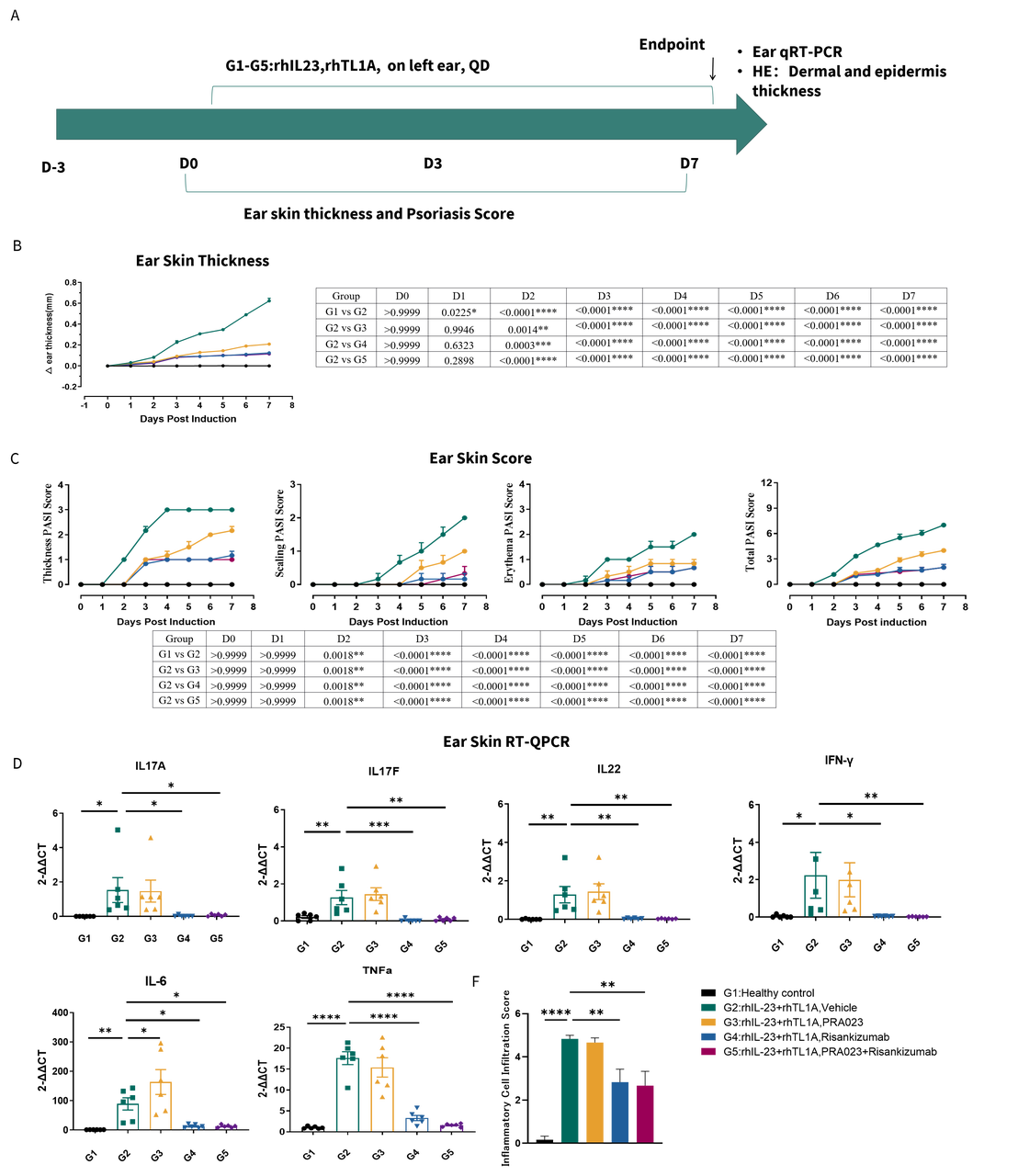
Panel A Study design. Recombinant human IL-23 and TL1A were administered to mice to establish psoriasis.
Panel B PRA023 (anti-TL1A), risankizumab, and combination treatment significantly reduced ear skin thickness relative to the psoriasis model group.
Panel C PRA023 (anti-TL1A), risankizumab, and combination treatment significantly alleviated skin thickness, scaling, erythema, and total PASI score.
Panel D mRNA expression of IL-17A, IL-17F, IL-22, IFN-γ, IL-6, and TNF-α was markedly elevated in the psoriasis group. Risankizumab and combination therapy significantly suppressed the transcript levels of these cytokines.
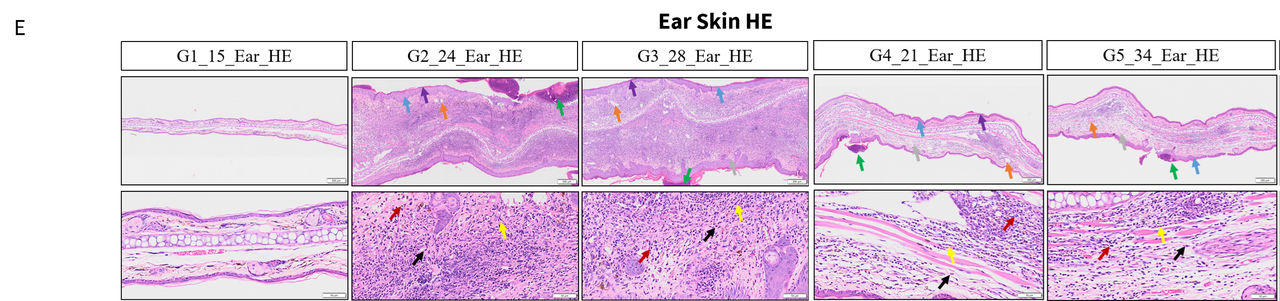
Panel E Representative H&E staining. Crust (green arrow); edema (gray arrow); vasodilation (orange arrow); epidermal hyperplasia (blue arrow); parakeratosis (purple arrow); fibrous connective tissue proliferation (yellow arrow); mononuclear cells (dark red arrow); neutrophils (black arrow). Quantitative analysis showed that the psoriasis model displayed substantially higher skin inflammatory scores than control mice. Risankizumab and combination treatment markedly lowered inflammatory scores.
Statistical analysis was performed using one‑way ANOVA, and all data is presented as mean ± SEM. *p<0.05, **p<0.01, ***p<0.001, ****p<0.0001.
All Product Lines


- 1
- 2
- 3
- 4
- 5
- 6
- 42
Recommended for You
Discover related models and services to accelerate your research

Accelerate Your Research
Download



Newsletter Signup


We value your privacy
This website will store cookies on your computer. These cookies are used to collect information about how you interact with this website and enable us to remember you. We use this information to improve and customize your browsing experience, as well as to analyze and collect relevant data and metrics about visitors on this website and other platforms. For more information about the cookies we use, please refer to our privacy policy
If you decline, your information will not be tracked when visiting this website. A cookie will be used in your browser to remember your preference settings that you have not accepted.


Contact Us
Schedule a Meeting
Let us know which event you're attending and we'd be happy to connect with you.