


- By Indication
 Inflammatory and Autoimmune DiseasesRespiratory DiseasesInfectious DiseasesRare DiseaseGut Microbiota Research ServiceBy Modality
 Preclinical Model Strategies for T-Cell Engagers: From Oncology to Autoimmune Disease
 2026-10-27
 11:00 AM ET
 Dr. Wanjun Yuan & Dr. Haiqiao SunOne TCE Modality. Two Disease Contexts. Different Preclinical Questions.
'/%3e%3c/svg%3e)

Thrombosis

- 5Validated Models
- 40+Studies Completed
- 10IND-Enabling Studies
Our Advantages
Industry-leading capabilities for thrombosis research

Diverse Thrombosis Models
Arterial, venous, and genetic models that replicate distinct clinical thrombotic disease scenarios.
01
Clinical Translation and Physiological Relevance
Closely reflect clinical disease to support translational research.
02
Genetic Diversity for Drug Screening
Various strains to mimic human coronary heart disease for drug screening.
03
Preclinical Expertise & IND Support
Extensive experience in thrombotic drug efficacy studies, with drug types including antibodies, small molecules, and small nucleic acids;
04
Model Library
Comprehensive thrombosis models for preclinical research

Case Studies & Validation Data
Explore our validated thrombosis studies demonstrating the efficacy of various therapeutic interventions.
FeCl₃ Induced Carotid Arterial Thrombosis
Ticagrelor inhibits FeCl₃-induced thrombosis in mice

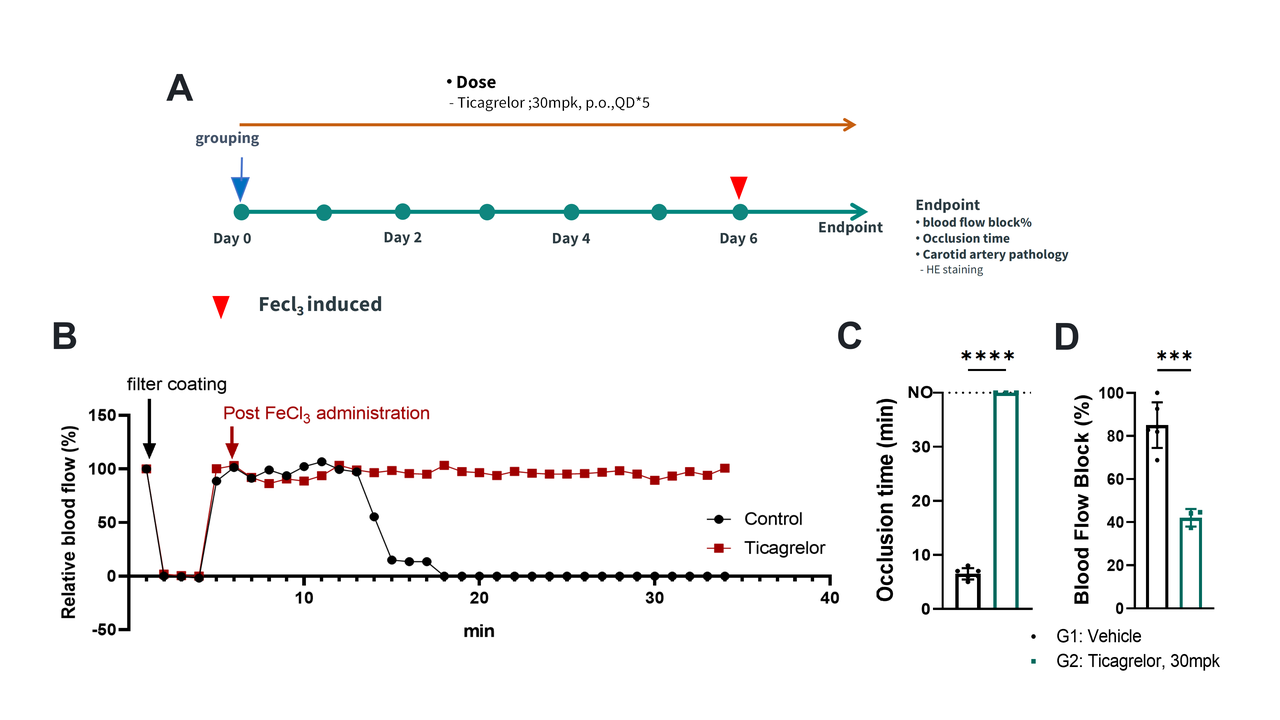
(A) Study design. (B-D) Ticagrelor treatment significantly maintained blood flow (B), prolonged time to vessel occlusion (C), and reduced maximum blood flow blockade (D) versus control.
Abelacimab Inhibits Thrombosis Dose-dependently.
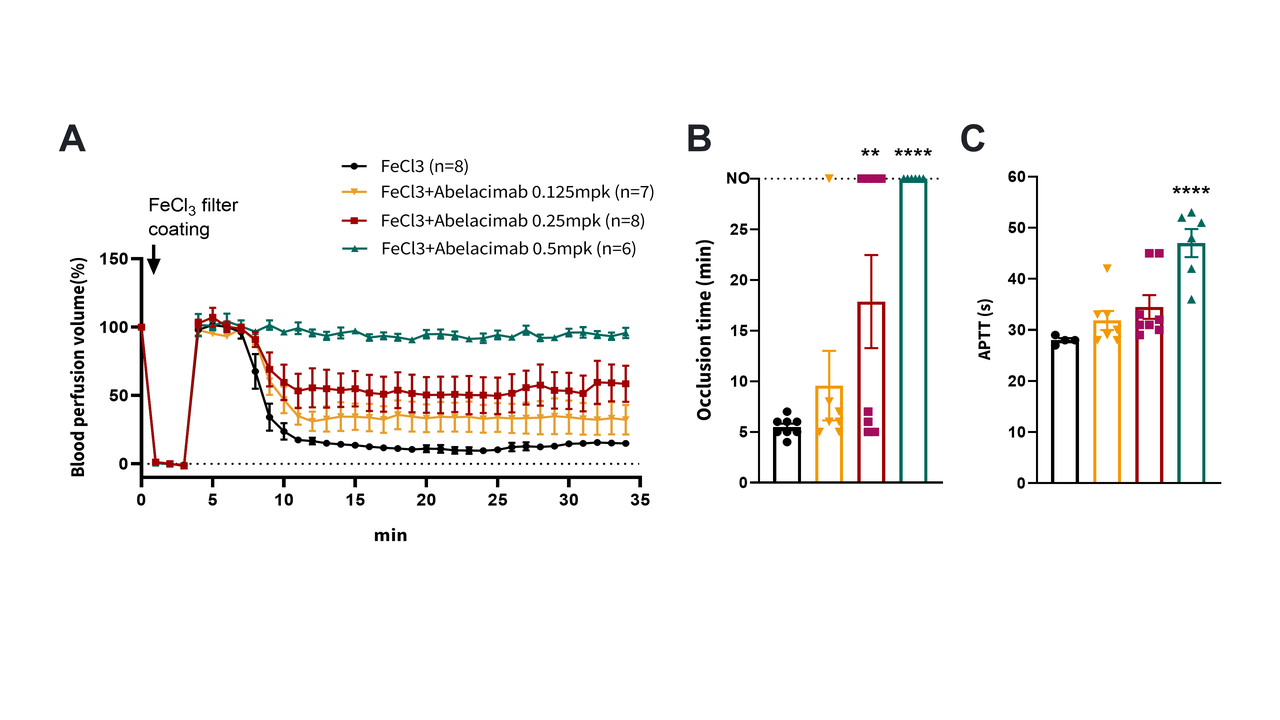 (A) Carotid blood flow after FeCl₃ injury. Abelacimab (0.125-0.5 mpk) delayed flow cessation vs. FeCl₃ only control. (B) Time to occlusion was dose-dependently prolonged. (C) APTT was significantly increased, confirming anticoagulation. Data as mean±SEM; *p<0.05, p<0.01,**p<0.0001.
Abelacimab Reduces Thrombus Burden
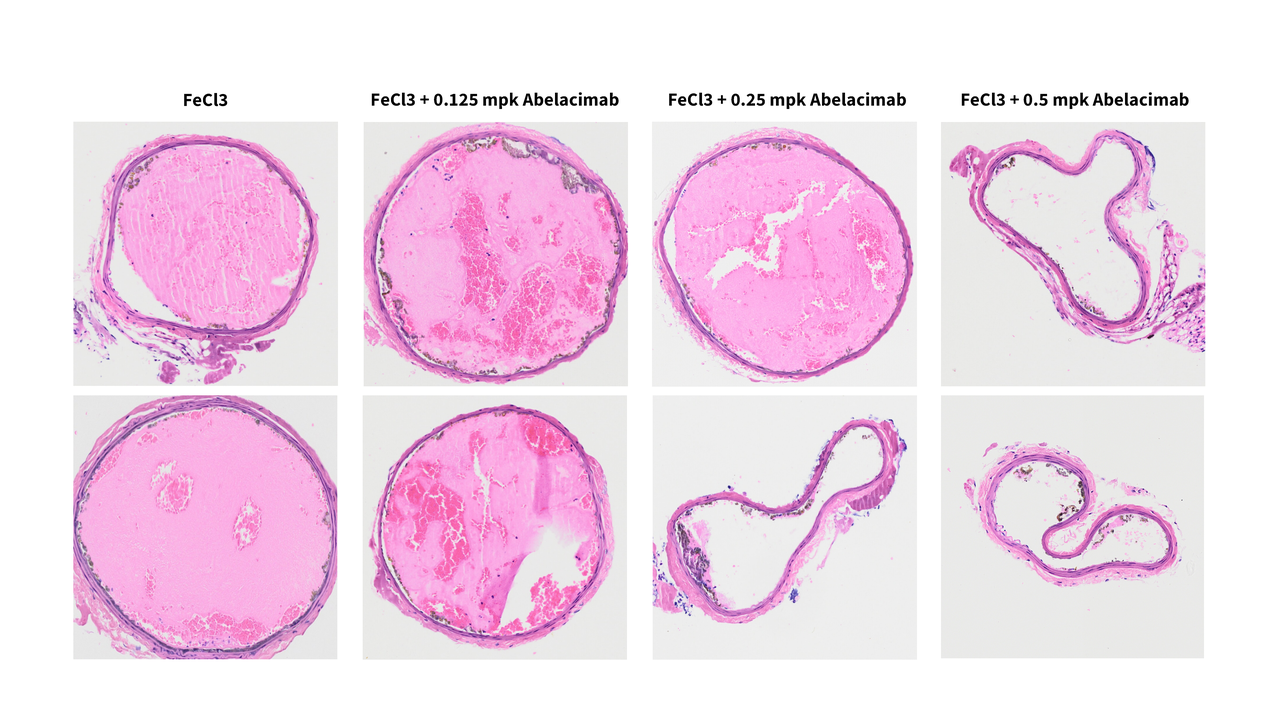 H&E-stained carotid artery sections post FeCl₃ injury. Vehicle control shows occlusive thrombus. Increasing Abelacimab doses (0.125, 0.25, 0.5 mg/kg) progressively and dose-dependently reduced thrombus size. The highest dose (0.5 mg/kg) resulted in only a small, non-occlusive thrombus, preserving lumen patency.

PCR-MCAO Stroke
Vascular imaging and pathology post-laser injury.
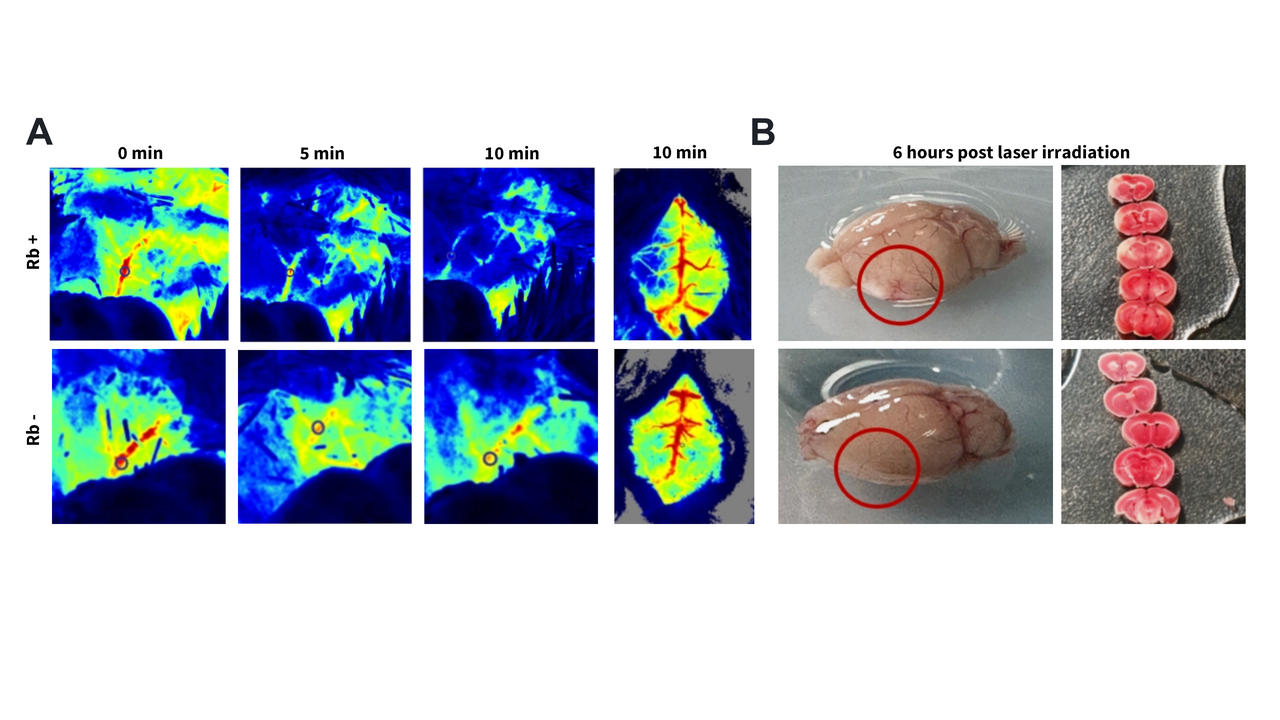 (A) Time-course vascular imaging (0, 5, 10 min) with/without fluorescence promotion (Rb+, Rb-). Maximum intensity projections (right) visualize vascular network architecture and blood flow signal. (B) Pathological exam at 6h. Specimen photos (red circles mark laser site) and TTC stained sections show infarction area after MCAO modeling.
All Product Lines
Browse our comprehensive catalog of over 30,000 mouse models covering various gene families, signaling pathways, and disease models. Use advanced filters to find the perfect model for your research.


- 1
- 2
- 3
- 4
- 5
- 6
- 9
Recommended for You
Discover related models and services to accelerate your research

Accelerate Your Research
Download



Newsletter Signup


We value your privacy
This website will store cookies on your computer. These cookies are used to collect information about how you interact with this website and enable us to remember you. We use this information to improve and customize your browsing experience, as well as to analyze and collect relevant data and metrics about visitors on this website and other platforms. For more information about the cookies we use, please refer to our privacy policy
If you decline, your information will not be tracked when visiting this website. A cookie will be used in your browser to remember your preference settings that you have not accepted.


Contact Us
Schedule a Meeting
Let us know which event you're attending and we'd be happy to connect with you.