


- By Indication
 Inflammatory and Autoimmune DiseasesRespiratory DiseasesInfectious DiseasesRare DiseaseGut Microbiota Research ServiceBy Modality
 Preclinical Model Strategies for T-Cell Engagers: From Oncology to Autoimmune Disease
 2026-10-27
 11:00 AM ET
 Dr. Wanjun Yuan & Dr. Haiqiao SunOne TCE Modality. Two Disease Contexts. Different Preclinical Questions.
'/%3e%3c/svg%3e)

Kidney Fibrosis

Our Advantages
Industry-leading capabilities for kidney Fibrosis research

Versatile Renal Antifibrosis Research Platform
We offer three classic preclinical kidney fibrosis models covering distinct injury pathways: surgical obstruction (UUO), metabolic crystal-induced injury (adenine-induced CKD), and nephrotoxin-triggered tubular damage (aristolochic acid-induced CKD). All three models stably recapitulate progressive tubulointerstitial fibrosis, providing a standardized platform for renoprotective, antifibrotic, and renal anemia drug discovery.
01
Multi-Modality Drug Screening Platform
Our platform has generated extensive evaluation data across multiple therapeutic classes, supporting screening of diverse drug formats. Tested agents include small molecules such as ALK5 inhibitors, SGLT2 inhibitors, and thalidomide, as well as biologics such as anti-IL6R antibody.
02
Model Library

Case Studies & Validation Data
ADPKD models for preclinical research
Unilateral Ureteral Obstruction (UUO)
Phenotypic manifestations of the UUO model in mice

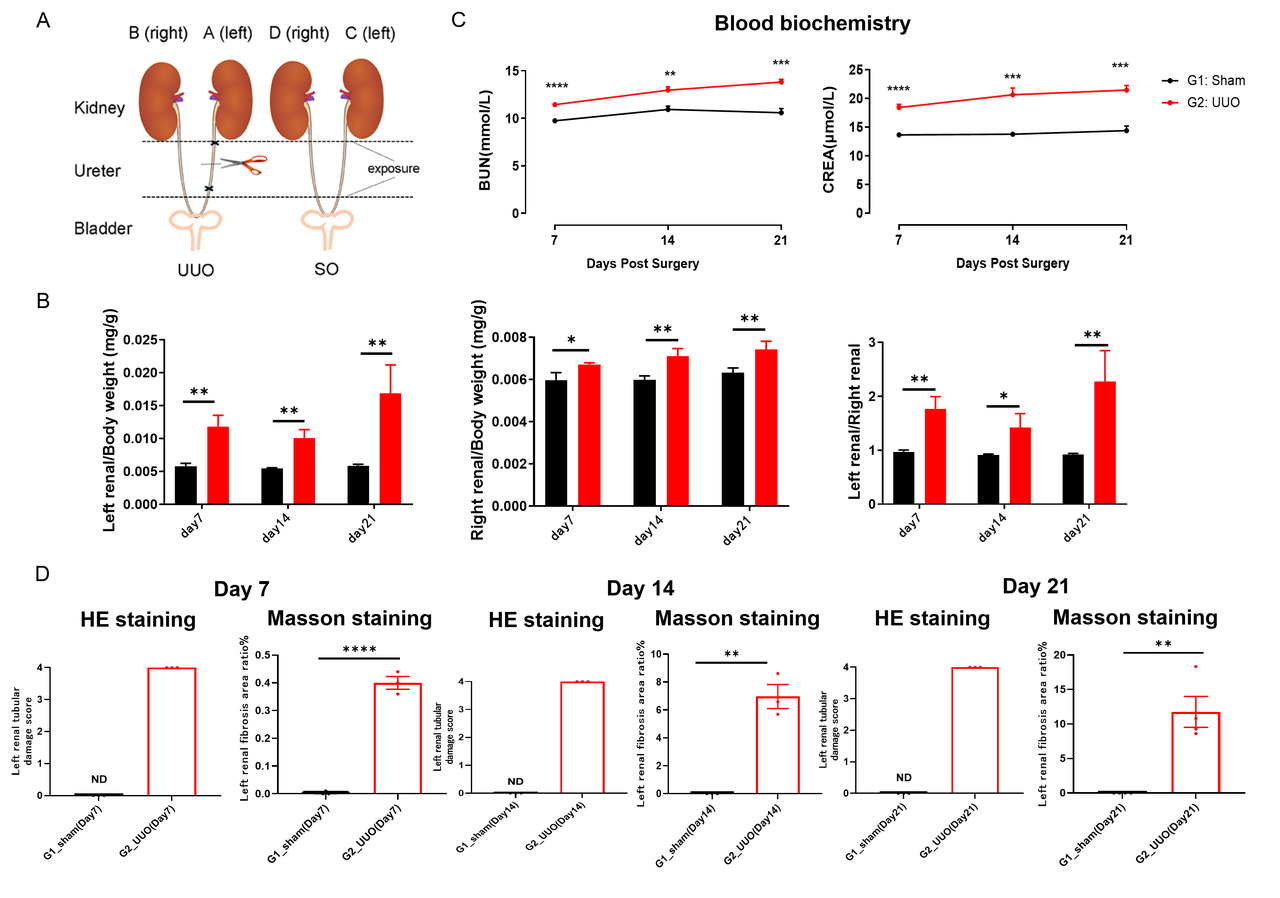
Panel A Schematic diagram of the surgical UUO model with unilateral ureteral obstruction.
Panel B The left kidney exhibited obvious swelling on days 7, 14 and 21 after left ureteral obstruction.
Panel C Serum BUN and CREA levels were significantly elevated in the UUO group relative to the sham group.
Panel D H&E staining scores and positive areas of Masson staining were increased in the UUO group compared with the sham group.
Statistical analysis was performed using one‑way ANOVA, and all data is presented as mean ± SEM. *p<0.05, **p<0.01, ***p<0.001,****p<0.0001. This study was collaborated with third party.
Efficacy assessment of an ALK5 inhibitor (ALK5i) in the UUO model.
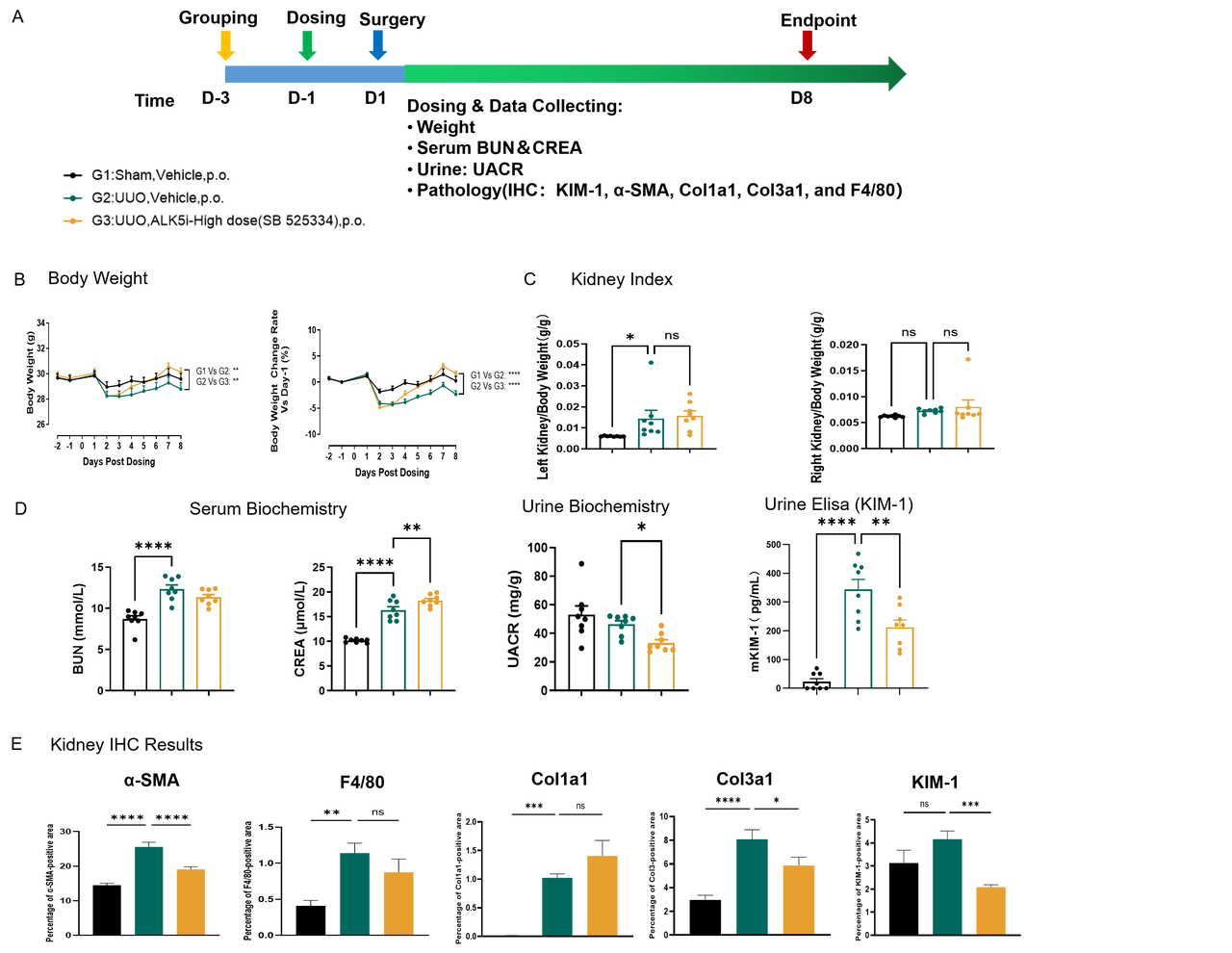
Panel A Study design.
Panel B Mice in the UUO group exhibited body weight loss relative to the sham group, and ALK5i treatment alleviated this weight loss.
Panel C ALK5i failed to attenuate renal swelling in the UUO model.
Panel D ALK5i treatment decreased serum BUN and CREA, as well as urinary UACR and KIM-1 levels in UUO mice.
Panel E Immunohistochemistry (IHC) revealed increased expression of α-SMA, F4/80 (macrophage marker), Col1a1, Col3a1 and KIM-1 in the UUO group, indicating prominent renal fibrosis and injury. ALK5i treatment downregulated all these markers.
Statistical analysis was performed using one‑way ANOVA, and all data is presented as mean ± SEM. *p<0.05, **p<0.01, ***p<0.001,****p<0.0001. This study was collaborated with third party.

Adenine-induced CKD
Thalidomide efficacy in the Adenine‑induced CKD model
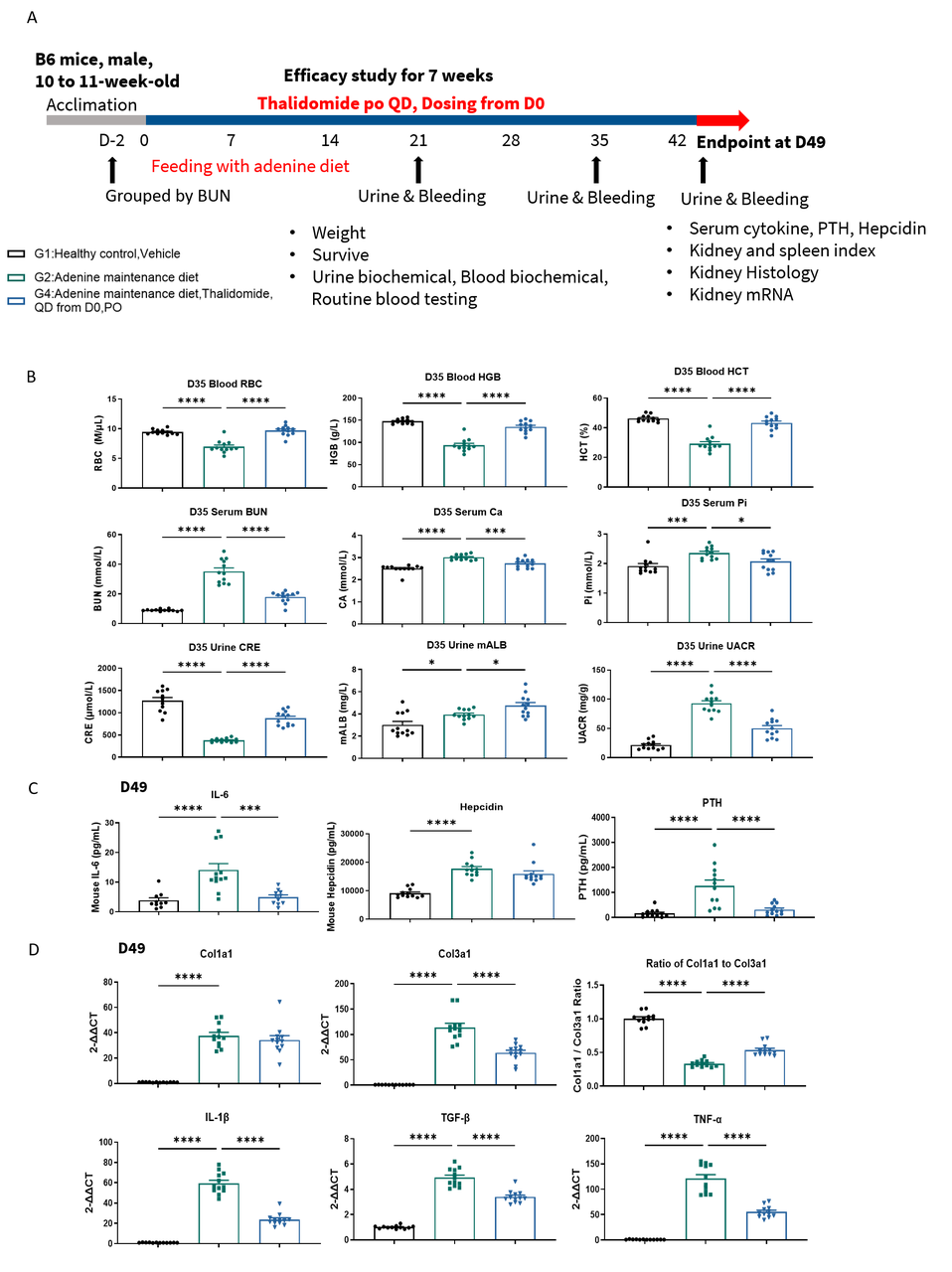
Panel A Study design.
Panel B The adenine diet successfully induced renal anemia in B6 mice, accompanied by significant decreases in RBC, HGB and HCT, while thalidomide treatment markedly rescued this pathological phenotype. Serum BUN, Ca and Pi levels, as well as urinary UACR, were elevated in the model group; all these abnormalities were ameliorated by thalidomide treatment.
Panel C At the experimental endpoint, serum IL-6, hepcidin and parathyroid hormone (PTH) were upregulated in the model group, and these increases were reversed by thalidomide treatment.
Panel D Renal tissues were collected for mRNA detection. The mRNA expression levels of Col1a1, as well as the inflammatory and profibrotic cytokines IL-1β, TGF-β and TNF-α, were significantly increased in the model group, all of which were downregulated by thalidomide treatment.
Statistical analysis was performed using one‑way ANOVA, and all data is presented as mean ± SEM. *p<0.05, **p<0.01, ***p<0.001,****p<0.0001
Aristolochic Acid (AAI)-induced CKD
Benazepril and Empagliflozin efficacy in an aristolochic acid-induced CKD model graph:
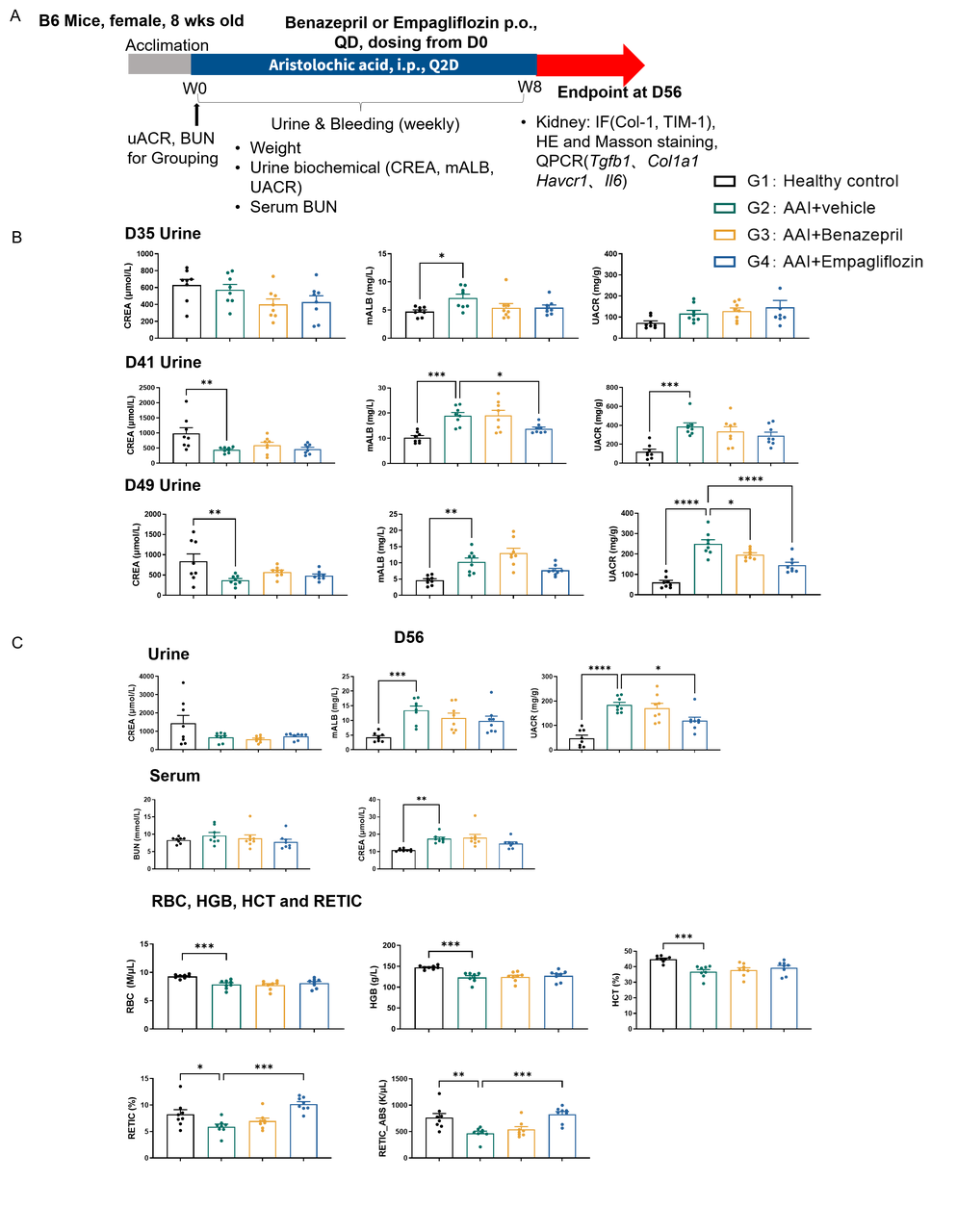
Panel A Study design.
Panel B UACR was markedly elevated on day 41 and day 49 after AAI injection. Treatment with either benazepril or empagliflozin significantly decreased UACR at day 49.
Panel C At the study endpoint (day 56), empagliflozin significantly reduced UACR. In the AAI model group, red blood cell count (RBC), hemoglobin (HGB), hematocrit (HCT), reticulocyte percentage (RETIC) and absolute reticulocyte count (RETIC_ABS) were all significantly decreased, indicating the development of anemia. Eight-week treatment with empagliflozin increased reticulocyte levels.
Statistical analysis was performed using one‑way ANOVA, and all data is presented as mean ± SEM. *p<0.05, **p<0.01, ***p<0.001,****p<0.0001
All Product Lines
Browse our comprehensive catalog of over 30,000 mouse models covering various gene families, signaling pathways, and disease models. Use advanced filters to find the perfect model for your research.


- 1
- 2
- 3
- 4
- 5
- 6
- 41
Recommended for You
Discover related models and services to accelerate your research

Accelerate Your Research
Download



Newsletter Signup


We value your privacy
This website will store cookies on your computer. These cookies are used to collect information about how you interact with this website and enable us to remember you. We use this information to improve and customize your browsing experience, as well as to analyze and collect relevant data and metrics about visitors on this website and other platforms. For more information about the cookies we use, please refer to our privacy policy
If you decline, your information will not be tracked when visiting this website. A cookie will be used in your browser to remember your preference settings that you have not accepted.


Contact Us
Schedule a Meeting
Let us know which event you're attending and we'd be happy to connect with you.