


- By Indication
 Inflammatory and Autoimmune DiseasesRespiratory DiseasesInfectious DiseasesRare DiseaseGut Microbiota Research ServiceBy Modality
 Preclinical Model Strategies for T-Cell Engagers: From Oncology to Autoimmune Disease
 2026-10-27
 11:00 AM ET
 Dr. Wanjun Yuan & Dr. Haiqiao SunOne TCE Modality. Two Disease Contexts. Different Preclinical Questions.
'/%3e%3c/svg%3e)

Alport Syndrome

Our Advantages
Industry-leading capabilities for alport syndrome research

Precisely recapitulates core pathogenic mechanisms of human Alport syndrome.
Homozygous knockout of Col4a3 disrupts the α3 chain of type IV collagen in the glomerular basement membrane, mirroring the genetic basis of hereditary Alport syndrome in patients.
01
Spontaneous, Progressive Disease Course
Chemical induction is not required for model establishment. As animals age, they spontaneously develop persistent proteinuria, glomerulosclerosis, tubulointerstitial fibrosis, and progressive renal function decline—faithfully replicating the human disease trajectory from microalbuminuria to severe proteinuria and ultimately end-stage renal failure.
02
Model Library
Comprehensive alport syndrome models for preclinical research

Case Studies & Validation Data
Explore our validated alport syndrome studies demonstrating the efficacy of various therapeutic interventions.
Col4a3-KO Spontaneous Alport Syndrome Model
Phenotypic Characterization of Col4a3-KO Mice and Standard of Care Drug Efficacy Evaluation

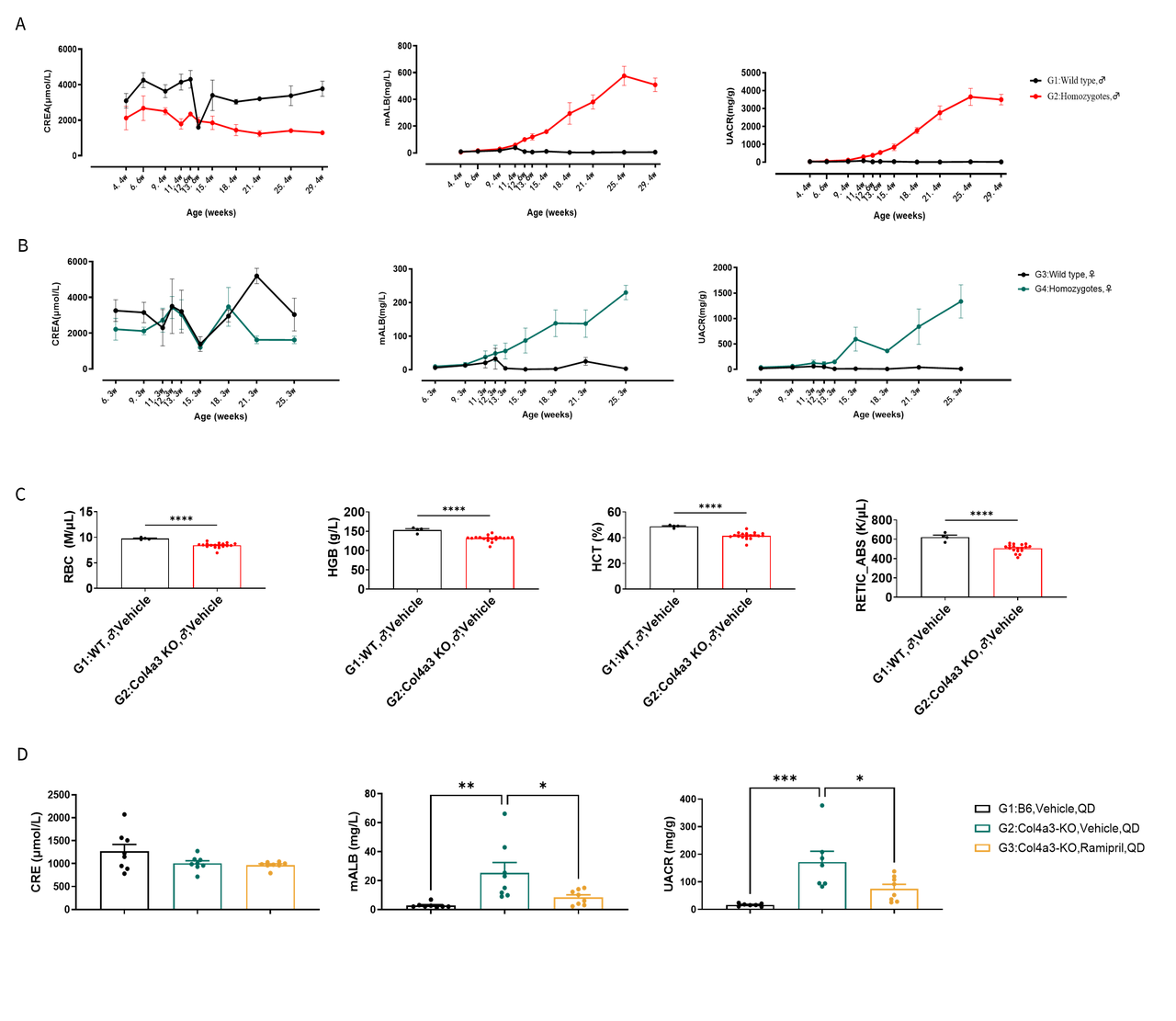
Panel A Urine mALB and UACR (mALB/CREA) levels were markedly elevated in male Col4a3-KO mice, with levels rising progressively with age, indicative of impaired renal function.
Panel B Urine mALB and UACR (mALB/CREA) levels were markedly elevated in female Col4a3-KO mice, with levels rising progressively with age, indicative of impaired renal function.
Panel C Peripheral blood analysis revealed that 8-week-old male B6-Col4a3-KO mice displayed significant reductions in RBC (red blood cell), HGB (hemoglobin), RETIC-ABS (absolute reticulocyte count), and HCT (hematocrit), confirming an anemic phenotype.
Panel D Mice were treated with Ramipril, an ACE-inhibitor. Treatment was initiated in male mice at 4 weeks of age. Five weeks post-treatment, UACR levels were significantly lowered following ramipril intervention.
Statistical analysis was performed using one‑way ANOVA, and all data is presented as mean ± SEM. *p<0.05, **p<0.01, ***p<0.001,****p<0.0001.

All Product Lines
Browse our comprehensive catalog of over 30,000 mouse models covering various gene families, signaling pathways, and disease models. Use advanced filters to find the perfect model for your research.


- 1
- 2
- 3
- 4
- 5
- 6
- 41
Recommended for You
Discover related models and services to accelerate your cardiovascular research

Ready to Start Your Custom Model Project?
Download



Newsletter Signup


We value your privacy
This website will store cookies on your computer. These cookies are used to collect information about how you interact with this website and enable us to remember you. We use this information to improve and customize your browsing experience, as well as to analyze and collect relevant data and metrics about visitors on this website and other platforms. For more information about the cookies we use, please refer to our privacy policy
If you decline, your information will not be tracked when visiting this website. A cookie will be used in your browser to remember your preference settings that you have not accepted.


Contact Us
Schedule a Meeting
Let us know which event you're attending and we'd be happy to connect with you.