


- By Indication
 Inflammatory and Autoimmune DiseasesRespiratory DiseasesInfectious DiseasesRare DiseaseGut Microbiota Research ServiceBy Modality
 Preclinical Model Strategies for T-Cell Engagers: From Oncology to Autoimmune Disease
 2026-10-27
 11:00 AM ET
 Dr. Wanjun Yuan & Dr. Haiqiao SunOne TCE Modality. Two Disease Contexts. Different Preclinical Questions.
'/%3e%3c/svg%3e)

Diabetes

- 5+Key Genetic Backgrounds for T1D and T2D
- 20+Metrics for Metabolic & Biomarker Analysis
- 15+Projects Supporting IND Filings
Our Advantages
Industry-leading capabilities for preclinical diabetes research.

Diverse and Clinically Relevant Models
GemPharmatech's diabetes models encompass genetic, diet-induced, and chemically-induced models that closely recapitulate human disease pathology and progression, supporting translational research.
01
Comprehensive Metabolic Assessment
Multi-parameter evaluation including blood glucose monitoring, glucose tolerance tests, insulin sensitivity assays, biomarker analysis, and histopathological examination.
02
Flexible and Customizable Study Design
Adaptable study designs for type 1 and type 2 diabetes, with options for dietary, chemical, and genetic induction, tailored to specific research and drug development needs.
03
Model Library

Case Studies & Validation Data
Explore our validated metabolic studies demonstrating the efficacy of various therapeutic interventions.
MLDS-Induced T1D Mouse Model (NCG Background)
Phenotypic Characterization of STZ-Induced Hyperglycemia in NCG Mice

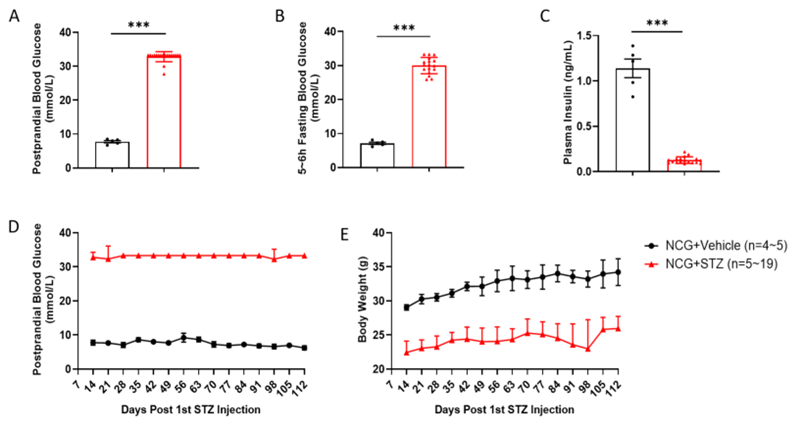
Streptozotocin (STZ) administration induced robust and sustained hyperglycemia in mice, characterized by markedly elevated postprandial and fasting blood glucose levels and a profound reduction in plasma insulin. Diabetic mice maintained blood glucose levels above 30 mmol/L for up to 112 days and exhibited significantly reduced body weight gain, demonstrating successful establishment of a stable insulin-deficient diabetes model.
(A) Postprandial blood glucose levels 14 days after the first STZ injection; (B) 5–6 h fasting blood glucose levels 14 days after the first STZ injection; (C) plasma insulin levels 14 days after the first STZ injection; (D) longitudinal postprandial blood glucose levels over the 112-day study period; and (E) body weight changes during the study period. Groups were defined as follows: G1, Vehicle; and G2, STZ (50 mpk, QD × 5, i.p.). Data are presented as mean ± SD. Statistical significance is indicated in the figure. ***, p < 0.001; and ****, p < 0.0001 by one-way ANOVA.

BKS-Lepr-/- (db/db)
Phenotypic Characteristics and Efficacy Evaluation of BKS-Lepr-/- (db/db) Mice
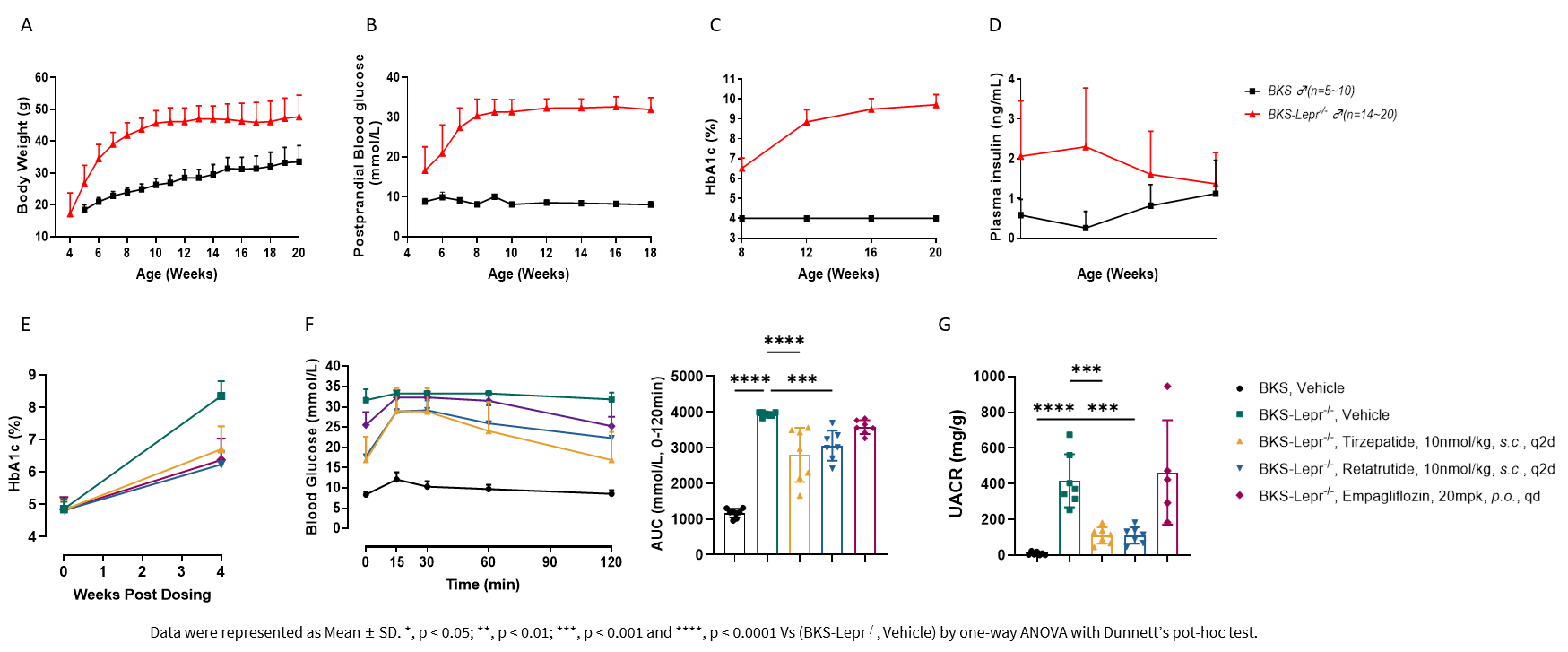
db/db mice developed progressive obesity and severe type 2 diabetes, characterized by marked body weight gain, persistent hyperglycemia, elevated HbA1c, and dynamic changes in plasma insulin levels. Treatment with Tirzepatide, Retatrutide, and Empagliflozin significantly improved glycemic control, while Tirzepatide and Retatrutide also enhanced glucose tolerance and reduced urinary albumin-to-creatinine ratio (UACR), demonstrating pronounced metabolic and renoprotective benefits.
(A) Body weight progression from baseline to 20 weeks of age; (B) postprandial blood glucose levels during model development; (C) HbA1c levels during model development; (D) plasma insulin levels during model development; (E) HbA1c levels after 4 weeks of treatment; (F) oral glucose tolerance test (OGTT) results following treatment; and (G) urinary albumin-to-creatinine ratio (UACR) after treatment. Groups were defined as follows: BKS-Lepr-/- mice treated with Vehicle, Tirzepatide, Retatrutide, or Empagliflozin, as indicated in the figure. Data are presented as mean ± SD. Statistical significance is indicated in the figure. *, p < 0.05; **, p < 0.01; ***, p < 0.001; and ****, p < 0.0001 vs. (BKS-Lepr-/-, Vehicle) by one-way ANOVA with Dunnett’s post-hoc test.
HFHSD + STZ
Disease Progression and Metabolic Dysfunction in HFHSD+STZ Model
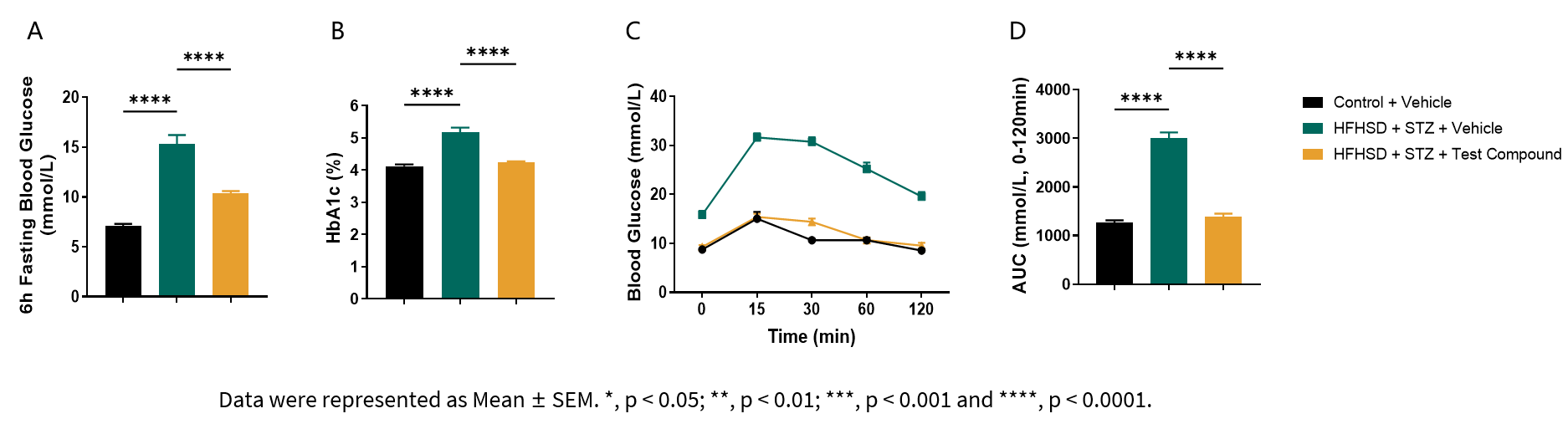
High-fat high-sucrose diet (HFHSD) combined with streptozotocin (STZ) successfully induced type 2 diabetes in mice, as evidenced by elevated fasting blood glucose, increased HbA1c, and impaired glucose tolerance. Treatment with the SGLT2i significantly reduced fasting blood glucose and HbA1c levels, improved glucose clearance during the oral glucose tolerance test (OGTT), and decreased glucose AUC, demonstrating robust antihyperglycemic efficacy.
(A) Six-hour fasting blood glucose levels; (B) HbA1c levels; (C) oral glucose tolerance test (OGTT) profiles; and (D) glucose AUC (0–120 min) during OGTT. Groups were defined as follows: G1, Control; G2, HFHSD + STZ + Vehicle; and G3, HFHSD + STZ + SGLT2i, as indicated in the figure. Data are presented as mean ± SD. Statistical significance is indicated in the figure. ****, p < 0.0001 vs. Control or HFHSD + STZ + Vehicle by one-way ANOVA with appropriate post-hoc comparisons.
Recommended Humanized Mice


- 1
- 2
- 3
- 4
- 5
- 6
- 12
Recommended for You
Discover related models and services to accelerate your research

Accelerate Your Research
Download



Newsletter Signup


We value your privacy
This website will store cookies on your computer. These cookies are used to collect information about how you interact with this website and enable us to remember you. We use this information to improve and customize your browsing experience, as well as to analyze and collect relevant data and metrics about visitors on this website and other platforms. For more information about the cookies we use, please refer to our privacy policy
If you decline, your information will not be tracked when visiting this website. A cookie will be used in your browser to remember your preference settings that you have not accepted.


Contact Us
Schedule a Meeting
Let us know which event you're attending and we'd be happy to connect with you.