


- By Indication
 Inflammatory and Autoimmune DiseasesRespiratory DiseasesInfectious DiseasesRare DiseaseGut Microbiota Research ServiceBy Modality
 Preclinical Model Strategies for T-Cell Engagers: From Oncology to Autoimmune Disease
 2026-10-27
 11:00 AM ET
 Dr. Wanjun Yuan & Dr. Haiqiao SunOne TCE Modality. Two Disease Contexts. Different Preclinical Questions.

'/%3e%3c/svg%3e)

Autosomal Dominant Polycystic Kidney Disease (ADPKD)

Our Advantages
Industry-leading capabilities for ADPKD research

Clinically Relevant Models
Our ADPKD mouse models combine high phenotypic relevance, short experimental duration, and scalability for large‑scale experiments.
01
Precise Intrarenal Delivery
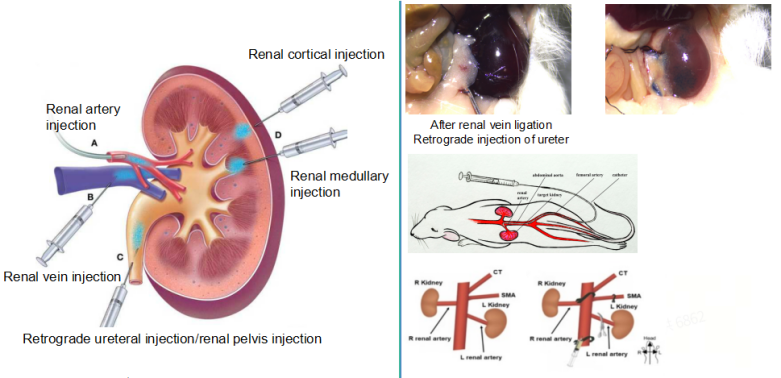
In addition to systemic administration of small nucleic acids (ASO, siRNA) via intraperitoneal or tail vein injection, our platform supports precise kidney-targeted delivery to evaluate the safety and efficacy of chemical modification and carrier conjugation, enhance renal drug enrichment, and reduced off-target effects.
02
Model Library

Case Studies & Validation Data
ADPKD models for preclinical research
ADPKD Disease Model
Phenotypic Manifestations of ADPKD Disease in Mice

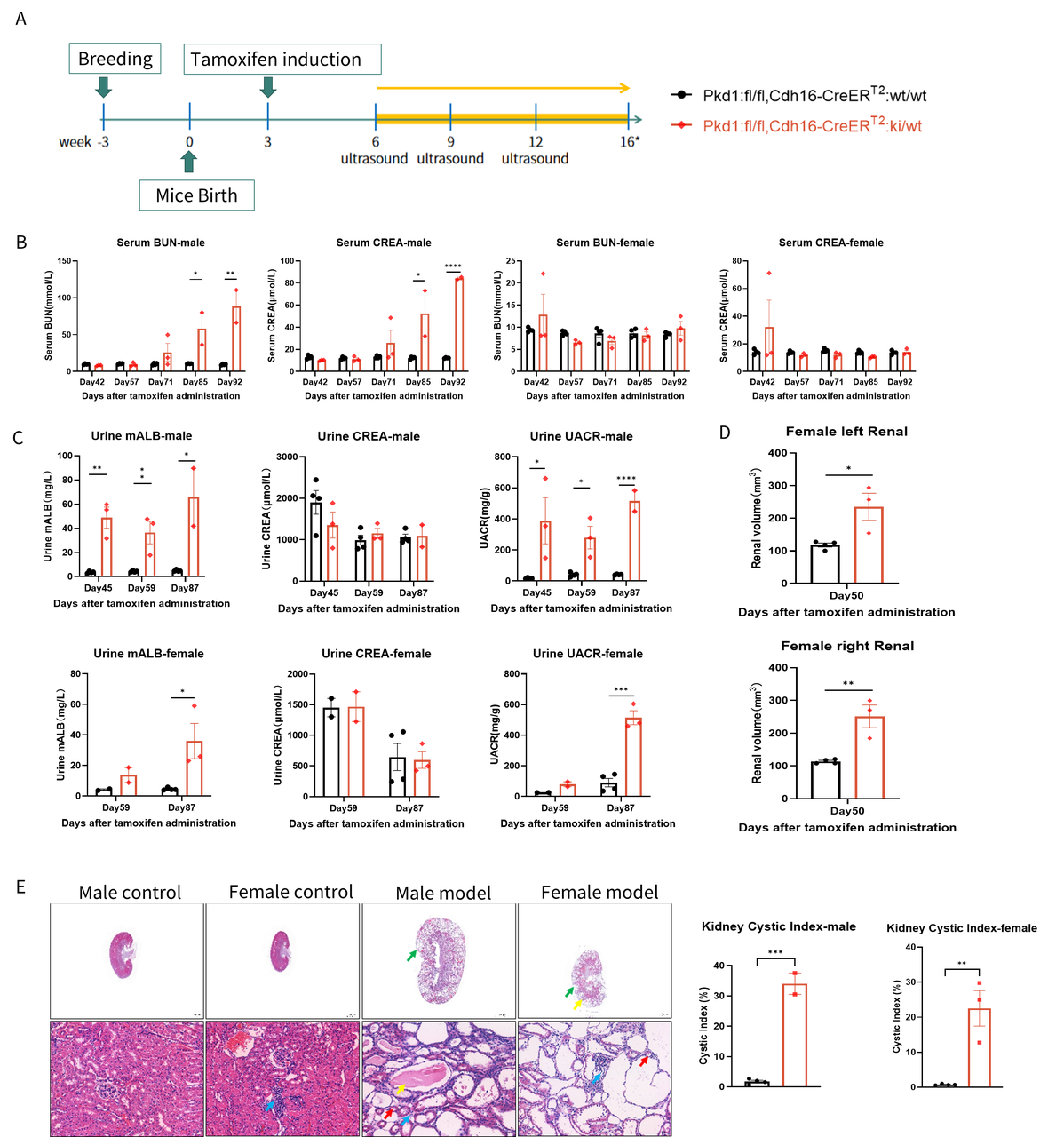
Panel A Pkd1-flox mice were bred with Cdh16-CreERT2 mice, followed by tamoxifen induction to establish an ADPKD mouse model with kidney-specific Pkd1 knockout. Phenotype validation data were collected as shown in the study design.
Panel B By 85 days (~12 weeks) post tamoxifen induction, serum BUN and CREA levels were significantly increased in Pkd1:fl/fl Cdh16-CreER(T2):ki/wt male mice, indicating impaired renal function.
Panel C Urine mALB and UACR (mALB/CREA) levels were significantly increased in Pkd1:fl/fl Cdh16-CreER(T2):ki/wt mice, with levels increasing with age, indicating impaired renal function.
Panel D At day 50, renal volumes were significantly increased in Pkd1:fl/fl Cdh16-CreER(T2):ki/wt female mice. Renal volumes in Pkd1:fl/fl Cdh16-CreER(T2):ki/wt male mice exceeded the upper limit of ultrasound detection (data not shown).
Panel E Significant pathological phenotypes, including the presence of multiple cysts, protein casts, and tubular atrophy, were observed in Pkd1:fl/fl Cdh16-CreERT2:ki/wt model mice.
Statistical analysis was performed using one‑way ANOVA, and all data presented as mean ± SEM. *p<0.05, **p<0.01, ***p<0.001,****p<0.0001
Tolvaptan Efficacy in ADPKD Disease Model
E
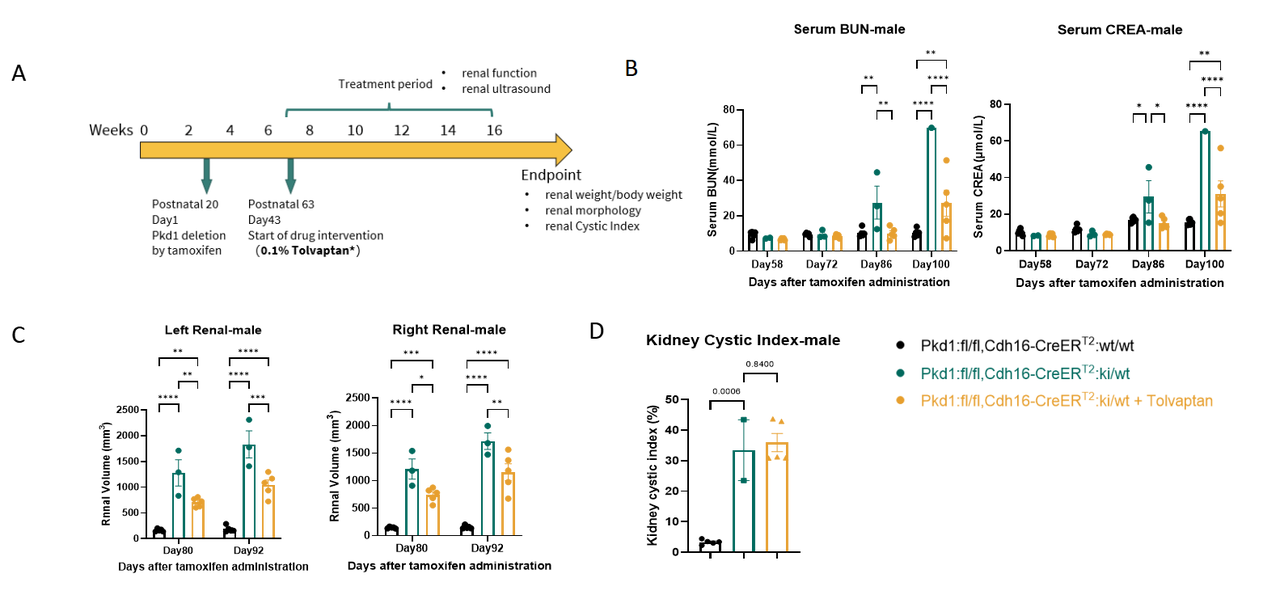
Panel A The efficacy of tolvaptan was evaluated in male diseased mice according to the study design.
Panel B Serum BUN and CREA levels were elevated 86 days after tamoxifen induction, and tolvaptan significantly reduced these parameters.
Panel C Renal ultrasonography revealed increased renal volume, and tolvaptan ameliorated the renal phenotype.
Panel D The kidney cystic index was markedly increased in the disease group at the study endpoint, while tolvaptan rescued this phenotype.
Panel E Intrarenal administration technology enables precise drug delivery.
Statistical analysis was performed using one‑way ANOVA, and all data are presented as mean ± SEM. *p<0.05, **p<0.01, ***p<0.001,****p<0.0001

All Product Lines
Browse our comprehensive catalog of over 30,000 mouse models covering various gene families, signaling pathways, and disease models. Use advanced filters to find the perfect model for your research.


- 1
- 2
- 3
- 4
- 5
- 6
- 42
Recommended for You
Discover related models and services to accelerate your research

Accelerate Your Research
Download



Newsletter Signup


We value your privacy
This website will store cookies on your computer. These cookies are used to collect information about how you interact with this website and enable us to remember you. We use this information to improve and customize your browsing experience, as well as to analyze and collect relevant data and metrics about visitors on this website and other platforms. For more information about the cookies we use, please refer to our privacy policy
If you decline, your information will not be tracked when visiting this website. A cookie will be used in your browser to remember your preference settings that you have not accepted.


Contact Us
Schedule a Meeting
Let us know which event you're attending and we'd be happy to connect with you.