


'/%3e%3c/svg%3e)

- By Indication
 Inflammatory and Autoimmune DiseasesRespiratory DiseasesInfectious DiseasesRare DiseaseGut Microbiota Research ServiceBy Modality
 Preclinical Model Strategies for T-Cell Engagers: From Oncology to Autoimmune Disease
 2026-10-27
 11:00 AM ET
 Dr. Wanjun Yuan & Dr. Haiqiao SunOne TCE Modality. Two Disease Contexts. Different Preclinical Questions.
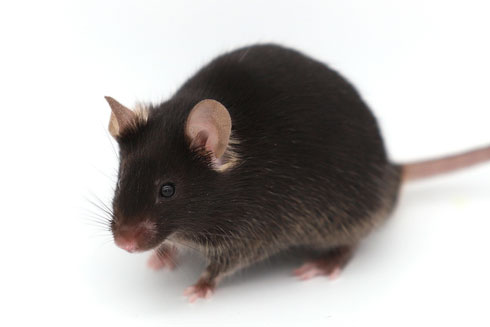
'/%3e%3c/svg%3e)
'/%3e%3c/svg%3e)

Metabolic
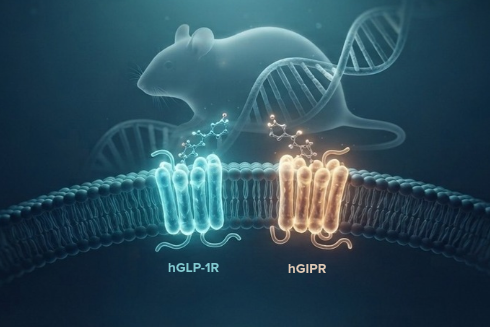
Evaluating Combination Obesity Therapies Using a Dual-Humanized GLP-1R/GIPR Platform
GemPharmatech’s B6-hGLP-1R/hGIPR dual-humanized DIO mouse model enables pharmacological evaluation of human GLP-1R and GIPR-directed therapeutics within the same obese metabolic context. In a 28-day study, the platform was used to characterize the effects of GLP-1R agonism, GIPR antagonism, and their combination across body weight, adiposity, glucose tolerance, and hepatic lipid metabolism.
 2026-09-29

The rapid development of incretin-based therapies has increased interest in strategies that can extend or complement the metabolic effects of GLP-1 receptor (GLP-1R) agonism. GIP receptor (GIPR) modulation represents one such approach, but evaluating the contribution of each pathway—and their interaction—requires models that faithfully capture human receptor pharmacology within a relevant metabolic context.
Species differences in receptor pharmacology can complicate the translation of conventional mouse studies, particularly when evaluating compounds designed to act on human targets. Humanized mouse models provide a way to address this challenge by replacing or introducing human receptor biology while retaining the physiological and metabolic features of the mouse system.
To investigate GLP-1R and GIPR pharmacology in the same obese metabolic setting, GemPharmatech developed a B6-hGLP-1R/hGIPR dual-humanized diet-induced obese (DIO) mouse model. This platform enables researchers to evaluate human GLP-1R agonism, GIPR antagonism/agonism, and combination treatment within a single experimental system, while assessing linked outcomes including body weight, body composition, glucose tolerance, food intake, and lipid metabolism.
In this 28-day study, we first established target-specific pharmacological responsiveness in the corresponding single-humanized models. We then used the dual-humanized DIO model to compare GLP-1R agonism, GIPR antagonism, and combination treatment. The resulting dataset provides a stepwise view of target engagement and integrated metabolic phenotypes, while highlighting both the opportunities and the mechanistic questions that remain for GLP-1R/GIPR combination strategies.
1. Validating Human GLP-1R and GIPR Pharmacology
The study followed stepwise translational logic. First, the single-humanized models established that each human receptor pathway was pharmacologically responsive in vivo. In B6-hGLP-1R DIO mice, orforglipron, an approved small molecule GLP1-R agonist, reduced body weight and adiposity, confirming the expected response to GLP-1R agonism. In hGIPR knock-in mice, [D-Ala²]GIP increased c-Fos-positive cells in the hypothalamic arcuate nucleus, consistent with central engagement of GIPR signaling[1]. Conversely, a GIPR antagonist blunted the glucose-lowering action of exogenous GIP during IPGTT. Together, these experiments verified receptor-specific pharmacology and provided the rationale for testing chronic GIPR antagonism alongside GLP-1R agonism in a shared dual-humanized DIO background.
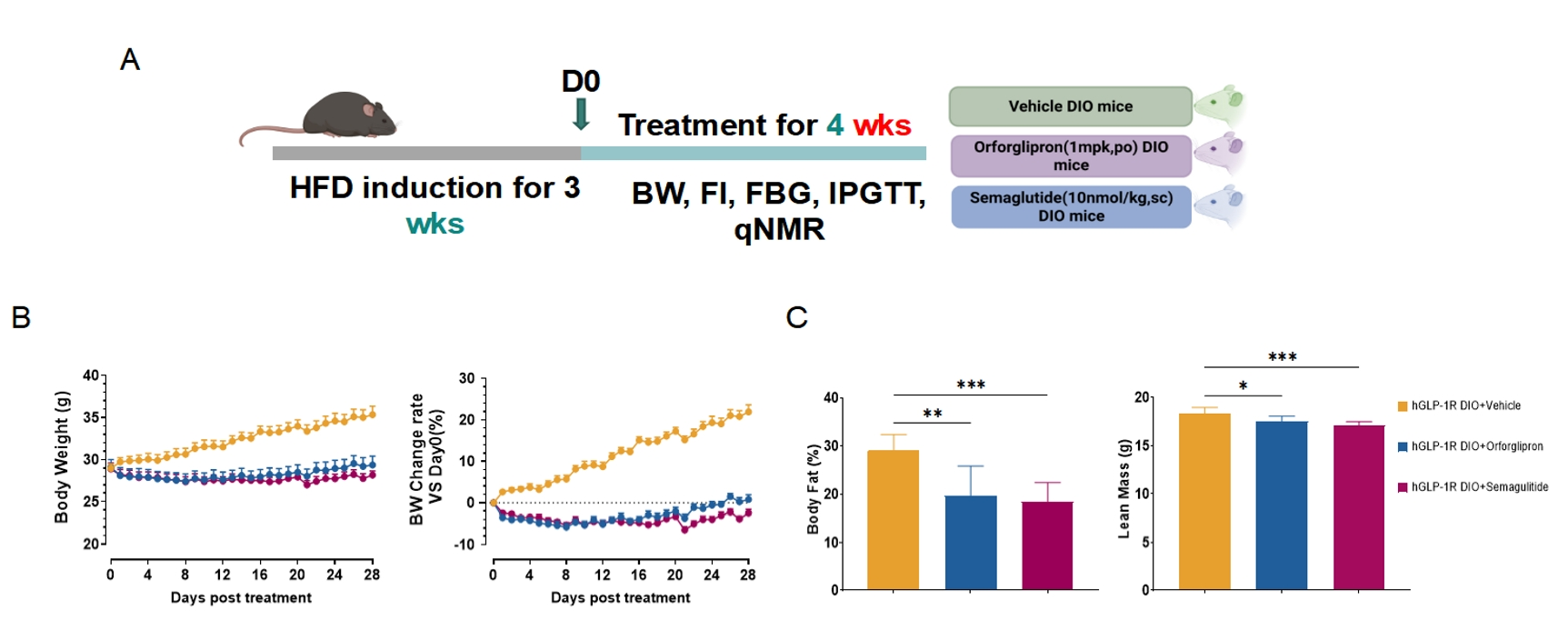
Figure 1. Orforglipron reduces body weight and adiposity in hGLP-1R DIO mice. Male B6-hGLP-1R DIO mice underwent 3 weeks of high-fat-diet induction followed by 4 weeks of treatment; the figure includes vehicle, orforglipron (1 mg/kg, p.o.), and semaglutide (5 nmol/kg, s.c.) groups. (A) Study design. (B) Body-weight and percentage change from day 0. (C) Terminal body-fat percentage and lean mass measured by qNMR.N=7, data are presented as individual animal values with mean ± SEM. Pre-specified comparisons used one-way ANOVA followed by Dunnett post-hoc testing; significance thresholds: * p < 0.05, ** p < 0.01, *** p < 0.001, **** p < 0.0001.
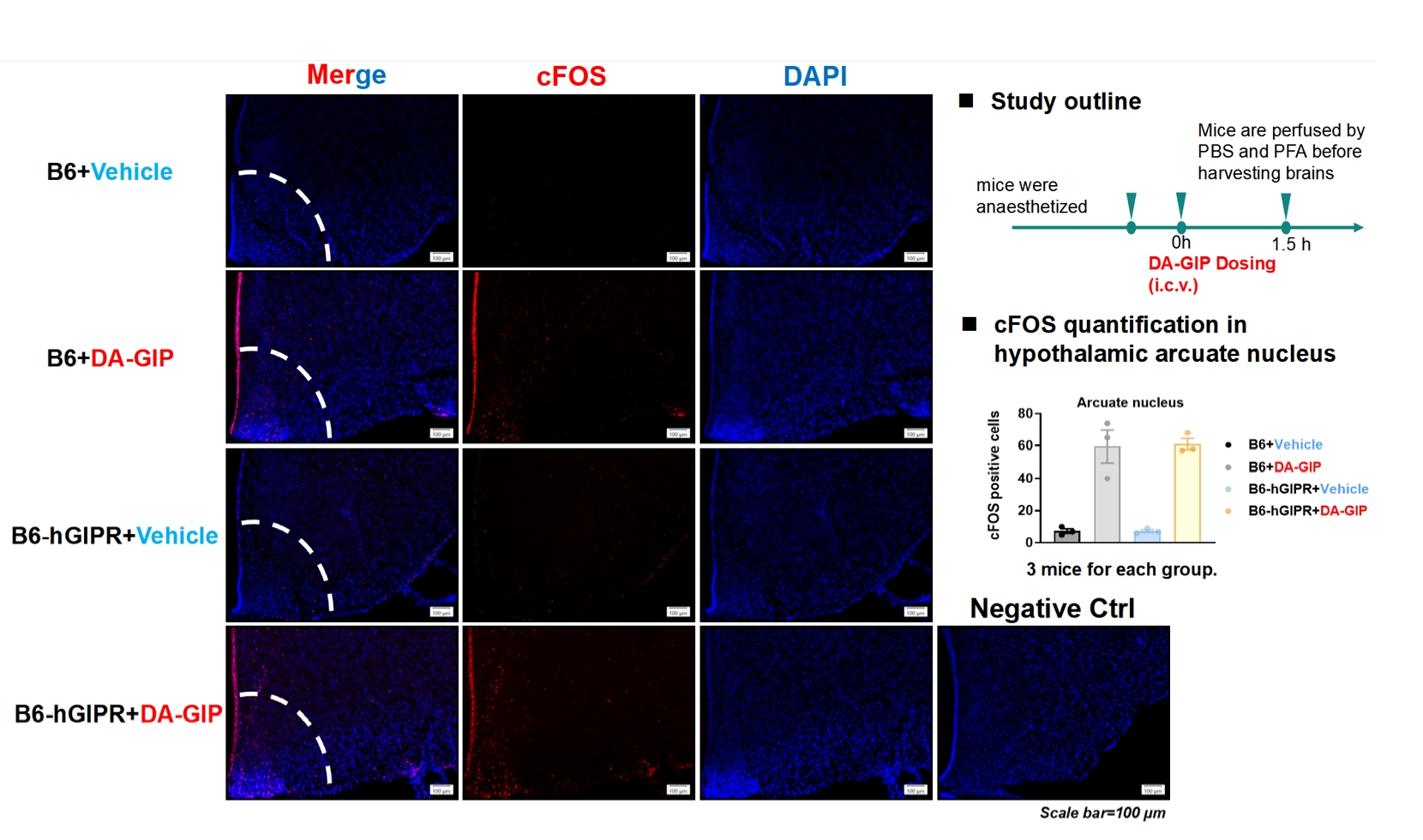
Figure 2. [D-Ala²]GIP activates neurons in the hypothalamic arcuate nucleus of hGIPR mice. B6 and B6-hGIPR mice received vehicle or intracerebroventricular [D-Ala²]GIP (50nmol/kg). Representative immunofluorescence images show c-Fos (red), DAPI-stained nuclei (blue), merged signal, and the negative control; the accompanying graph quantifies c-Fos-positive cells in the arcuate nucleus. Scale bar, 100 µm. Data are presented as individual animal values with mean ± SEM, N=5.
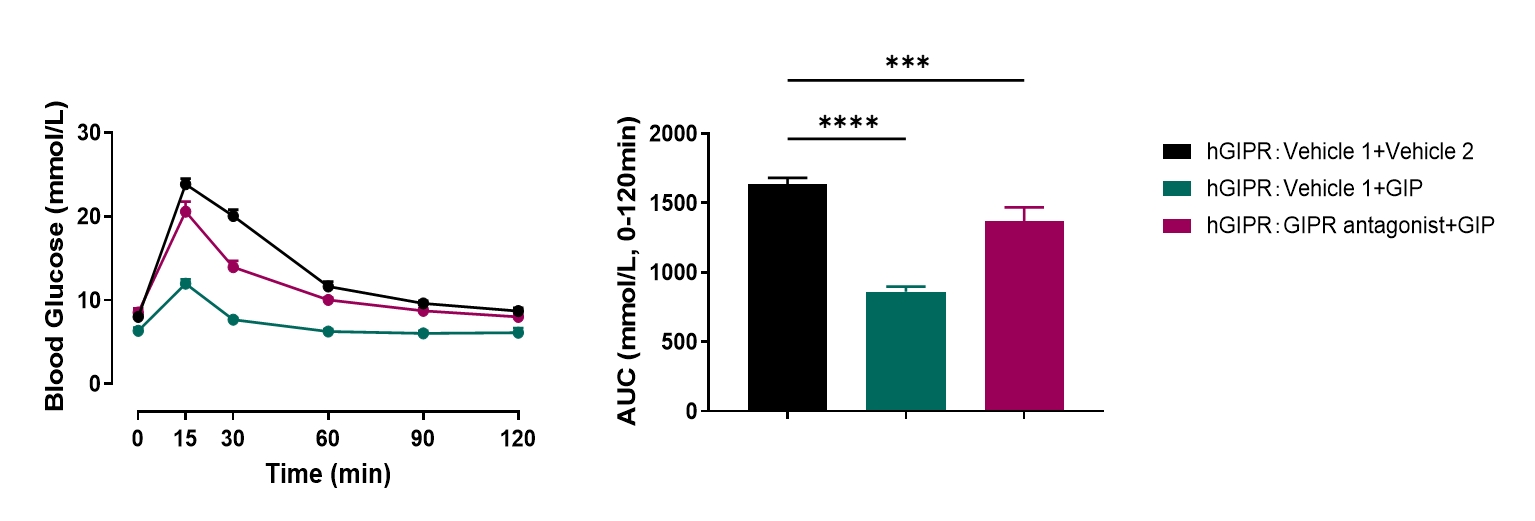
Figure 3. GIPR antagonism attenuates GIP-mediated glucose lowering in B6-hGIPR mice. Male B6-hGIPR mice received [D-Ala²]GIP (5 nmol/kg, s.c.) together with vehicle or GIPR antagonist (6 mg/kg, p.o.) before IPGTT. Blood glucose was measured from 0 to 120 min, and glucose AUC was calculated over the same interval. Co-administration of the GIPR antagonist attenuated the glucose-lowering effect of [D-Ala²]GIP, resulting in greater glucose excursion and increased glucose AUC compared with [D-Ala²]GIP alone. N=5, data are presented as mean ± SEM. Pre-specified comparisons were performed using Student’s t-test; significance thresholds: * p < 0.05, ** p < 0.01, *** p < 0.001, **** p < 0.0001.
2. Assessing Combination Effects on Body Weight and Food Intake
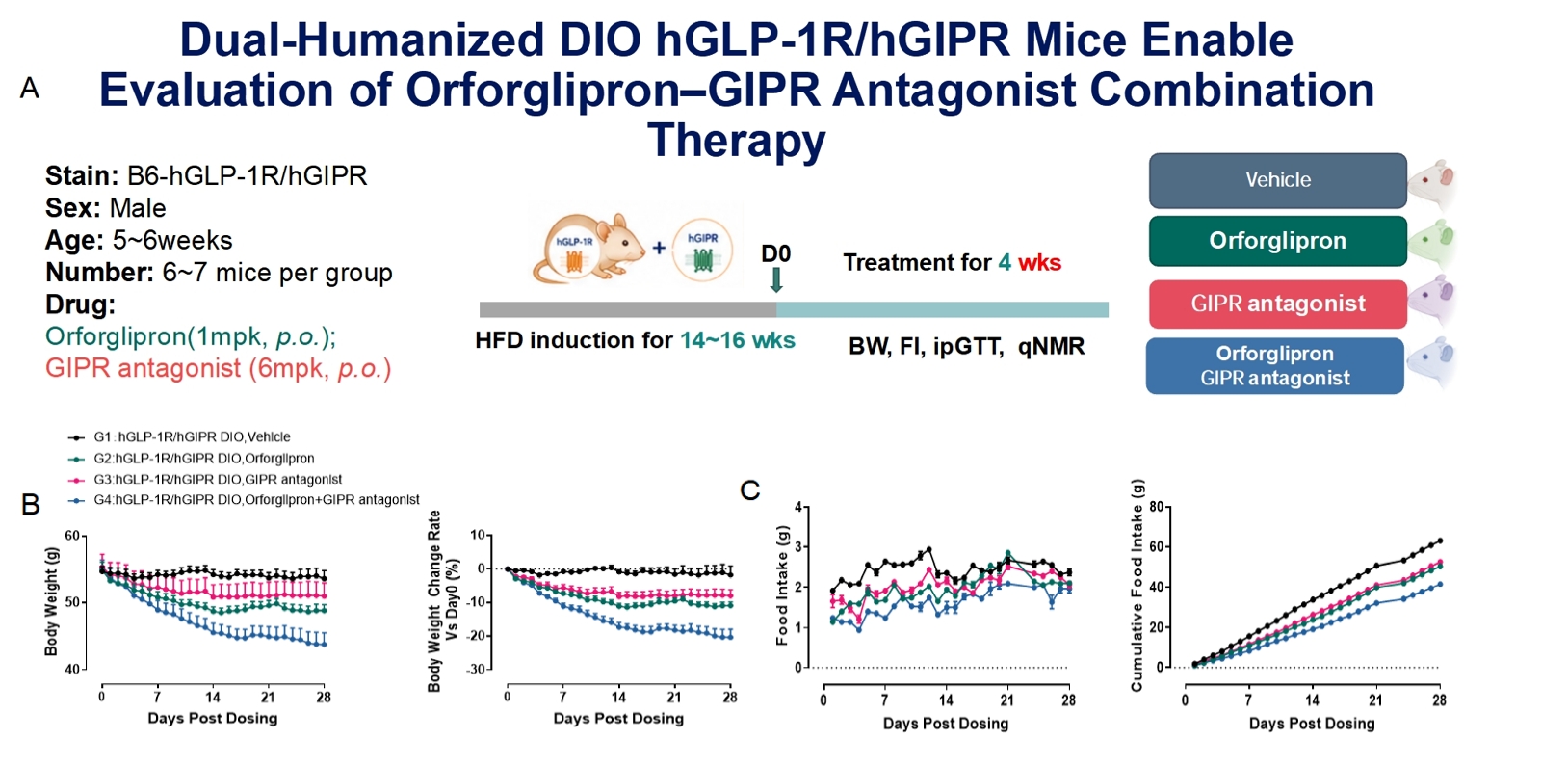
Figure 4. Study design and body-weight and food-intake responses to chronic GLP-1R agonism and GIPR antagonism in dual-humanized DIO mice. (A) Male B6-hGLP-1R/hGIPR DIO mice (5–6 weeks old at study start) underwent high-fat diet induction for 14–16 weeks before receiving vehicle, orforglipron (1 mg/kg, p.o.), GIPR antagonist (6 mg/kg, p.o.), or the combination once daily for 28 days. Study design showing the treatment period and scheduled metabolic assessments. (B) Absolute body weight and percentage change from day 0. (C) Daily food intake and cumulative food intake. N=6-7, data are presented as mean ± SEM.
By day 28, the combination group showed the greatest reduction in body weight (approximately 20% from baseline) and the lowest cumulative food intake (approximately 42 g). In comparison, body weight decreased by approximately 10% with orforglipron and 7% with GIPR antagonist, with cumulative food intake of approximately 50 g and 53 g, respectively. Thus, under the conditions tested, the combination produced a greater body-weight reduction than either monotherapy and was accompanied by lower cumulative food intake.
The present study does not distinguish the contribution of reduced food intake from other potential changes in energy balance.
3. Characterizing Changes in Adiposity and Lean Mass
qNMR measurements revealed a favorable shift in body composition, with the combination treatment producing the greatest reductions in fat mass and fat percentage. Importantly, despite the substantially greater overall weight loss, the reduction in absolute lean mass remained modest, while lean percentage increased in the combination group. This pattern indicates that the additional weight loss was driven predominantly by adiposity reduction rather than proportional loss of lean tissue, highlighting a favorable fat-to-lean profile with combined GLP-1R agonism and GIPR antagonism. These findings suggest that GIPR antagonism may help enhance fat loss while limiting the relative impact on lean mass during pharmacological weight reduction[2].
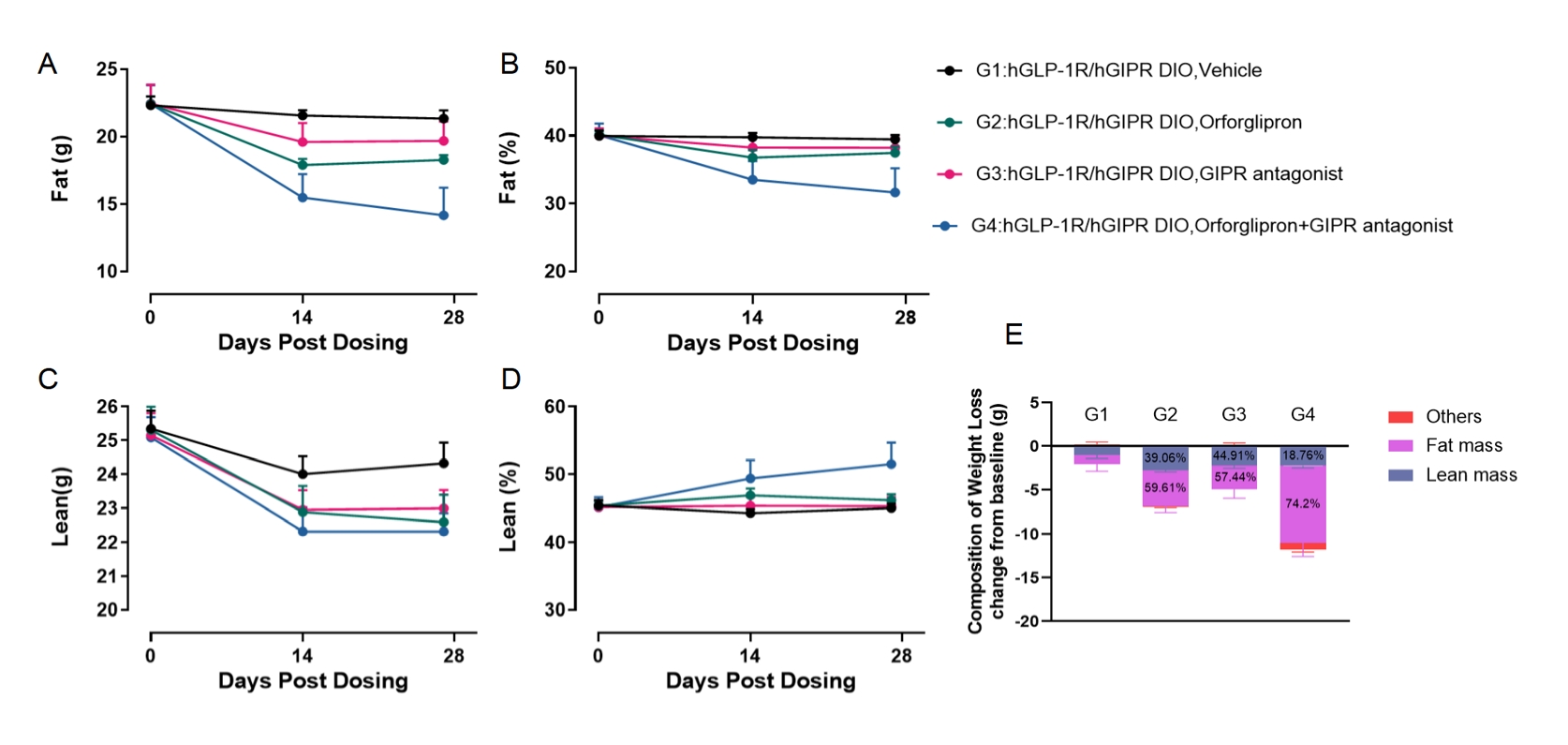
Figure 5. Longitudinal body-composition changes during chronic treatment. Male B6-hGLP-1R/hGIPR DIO mice received vehicle, orforglipron (1 mg/kg, p.o.), GIPR antagonist (6 mg/kg, p.o.), or the combination once daily for 28 days (n = 7/group). qNMR was performed at baseline and on days 14 and 28. (A) Fat mass. (B) Fat percentage. (C) Lean mass. (D) Lean percentage. (E) Contribution of fat mass, lean mass, and other compartments to the change in body weight from baseline. N=6-7, data are presented as individual animal values with mean ± SEM.
4. Evaluating Glucose Tolerance After Chronic Treatment
After 28 days, both orforglipron-containing groups showed markedly lower glucose excursion during IPGTT than vehicle, with the combination yielding the lowest AUC. GIPR antagonist monotherapy produced an intermediate improvement. Because the glucose phenotype accompanied reductions in body weight and adiposity, the experiment demonstrates improved whole-body glucose tolerance but does not distinguish direct receptor effects from changes secondary to weight loss. Pair-feeding or weight-matched studies would be required to resolve those contributions[3,4].
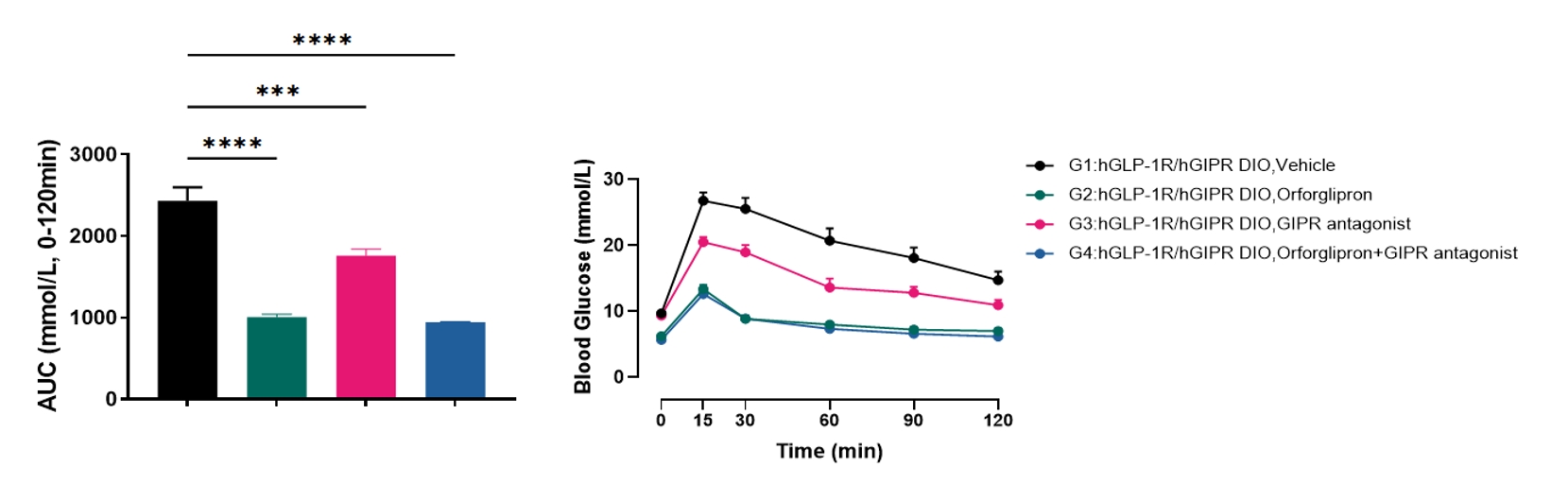
Figure 6. Glucose tolerance after 28 days of treatment in dual-humanized DIO mice. Male B6-hGLP-1R/hGIPR DIO mice received vehicle, orforglipron (1 mg/kg, p.o.), GIPR antagonist (6 mg/kg, p.o.), or the combination once daily for 28 days (n = 7/group). Following an intraperitoneal glucose challenge, blood glucose was measured from 0 to 120 min and AUC was calculated over the same interval. N=6-7, data are presented as individual animal values with mean ± SEM. Pre-specified comparisons used one-way ANOVA followed by Dunnett post-hoc testing; significance thresholds: * p < 0.05, ** p < 0.01, *** p < 0.001, **** p < 0.0001.
5. Resolving Hepatic and Circulating Lipid Responses
The combination group had the lowest hepatic triglyceride concentration (approximately 4.5 mmol/L), compared with approximately 13, 8, and 9 mmol/L in the vehicle, orforglipron, and GIPR-antagonist groups, respectively. This reduction was concordant with the greater losses of body weight and adiposity and the improved IPGTT profile, extending the combination phenotype to hepatic lipid burden.
Plasma triglycerides moved in the opposite direction: both antagonist-containing groups showed higher concentrations than vehicle. The divergence between hepatic and circulating triglycerides argues against describing the result as a uniform reduction in systemic lipid burden. Instead, it indicates redistribution or altered flux between tissue and circulation, consistent with literature linking GIPR signaling to adipose lipid metabolism[5,6].
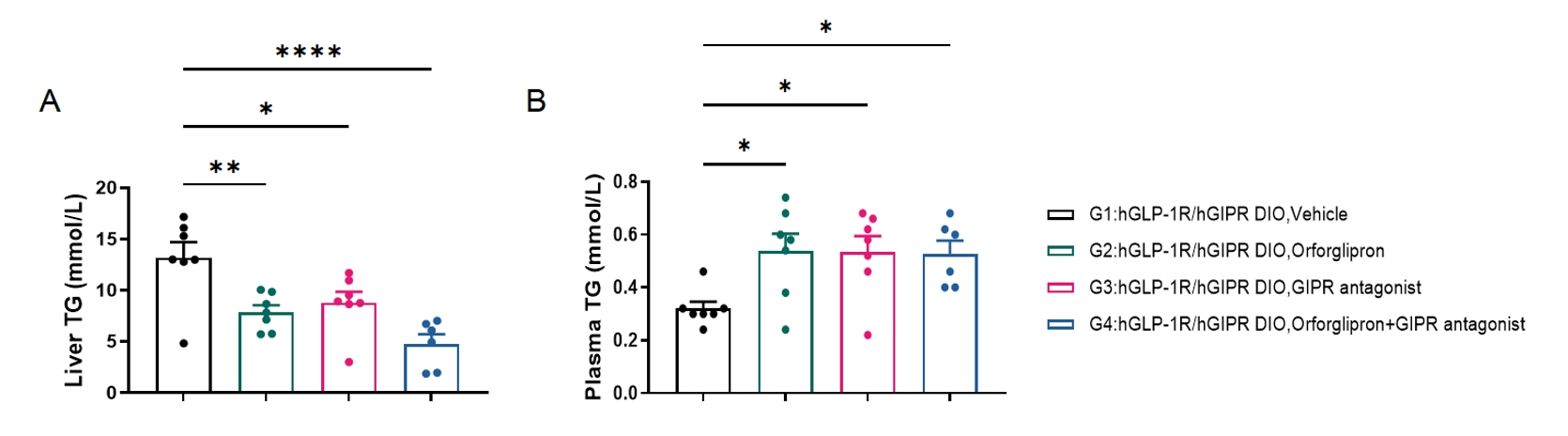
Figure 7. Hepatic and circulating triglyceride levels after chronic treatment. Male B6-hGLP-1R/hGIPR DIO mice received vehicle, orforglipron (1 mg/kg, p.o.), GIPR antagonist (6 mg/kg, p.o.), or the combination once daily for 28 days (n = 7/group). (A) Liver triglyceride concentration. (B) Plasma triglyceride concentration. N-6-7, data are presented as individual animal values with mean ± SEM. Pre-specified comparisons used one-way ANOVA followed by Dunnett post-hoc testing; significance thresholds: * p < 0.05, ** p < 0.01, *** p < 0.001, **** p < 0.0001.
6. What the Dual-Humanized DIO Model Reveals
This study illustrates how a stepwise humanized model strategy can connect receptor-specific pharmacology with integrated metabolic efficacy. The single-humanized models established functional responsiveness of human GLP-1R and GIPR, while the B6-hGLP-1R/hGIPR dual-humanized DIO model, generated from these two humanized backgrounds, provided a shared obese metabolic context for evaluating chronic GLP-1R agonism, GIPR antagonism, and their combination.
Across the 28-day study, the combination treatment produced the greatest reduction in body weight and adiposity, accompanied by improved glucose tolerance and the lowest hepatic triglyceride concentration. Importantly, the improvement in glucose tolerance should be interpreted as part of this broader metabolic phenotype: reductions in body weight, fat mass, and hepatic lipid accumulation collectively indicate an improvement in metabolic status that may contribute to the attenuation of glucose intolerance. These associations support an integrated metabolic benefit but do not, by themselves, establish the mechanism responsible for the improved glucose response.
The lipid findings also reveal an interesting metabolic phenotype. Hepatic triglyceride content was markedly reduced, whereas circulating triglycerides were increased in antagonist-containing groups, suggesting that chronic GIPR antagonism may alter triglyceride handling between circulation and peripheral tissues. This interpretation is supported by previous studies showing that pharmacological GIPR antagonism can increase circulating triglycerides while reducing plasma lipoprotein lipase (LPL) activity, a key determinant of triglyceride-rich lipoprotein clearance and tissue lipid uptake[7,8]. In a chronic DIO study, GIPR antagonism was also associated with reduced LPL activity and lower hepatic triglyceride content[8]. Together, these observations provide a mechanistic basis for further investigating whether altered lipid uptake and clearance contribute to the lipid phenotype observed in the present study.
References
1. Zhang Q, Delessa CT, Augustin R, et al. The glucose-dependent insulinotropic polypeptide (GIP) regulates body weight and food intake via CNS-GIPR signaling. Cell Metabolism. 2021;33(4):833–844.e5..
2. Karakasis P, Patoulias D, Fragakis N, Mantzoros CS. Effect of glucagon-like peptide-1 receptor agonists and co-agonists on body composition: Systematic review and network meta-analysis. Metabolism. 2025;164:156113. doi:10.1016/j.metabol.2024.156113.
3. Campbell JE. Targeting the GIPR for obesity: To agonize or antagonize? Potential mechanisms. Molecular Metabolism. 2021;46:101139. doi:10.1016/j.molmet.2020.101139.
4. West JA, Tsakmaki A, Ghosh SS, Parkes DG, Grønlund RV, Pedersen PJ, et al. Chronic peptide-based GIP receptor inhibition exhibits modest glucose metabolic changes in mice when administered either alone or combined with GLP-1 agonism. PLOS ONE. 2021;16(3):e0249239. doi:10.1371/journal.pone.0249239.
5. Boer GA, Keenan SN, Miotto PM, Holst JJ, Watt MJ. GIP receptor deletion in mice confers resistance to high-fat diet-induced obesity via alterations in energy expenditure and adipose tissue lipid metabolism. American Journal of Physiology-Endocrinology and Metabolism. 2021;320(4):E835-E845. doi:10.1152/ajpendo.00646.2020.
6. Gault VA, McClean PL, Cassidy RS, Irwin N, Flatt PR. Chemical gastric inhibitory polypeptide receptor antagonism protects against obesity, insulin resistance, glucose intolerance and associated disturbances in mice fed high-fat and cafeteria diets. Diabetologia. 2007;50(8):1752-1762. doi:10.1007/s00125-007-0710-4.
7. Nakamura T, Tanimoto H, Okamoto M, et al. Biological and functional characteristics of a novel low-molecular weight antagonist of glucose-dependent insulinotropic polypeptide receptor, SKL-14959, in vitro and in vivo. Diabetes Obes Metab. 2012;14(6):511–517. doi:10.1111/j.1463-1326.2011.01555.x.
8. Nakamura T, Tanimoto H, Okamoto M, Takeuchi M, Tsubamoto Y, Noda H. GIP Receptor Antagonist, SKL-14959 Indicated Alteration of the Lipids Metabolism to Catabolism by the Inhibition of Plasma LPL Activity, Resulting in the Suppression of Weight Gain on Diets-Induced Obesity Mice. Diabetes Metab Syndr Obes. 2021;14:1095–1105. doi:10.2147/DMSO.S297353
Research Use Only
These preclinical findings do not constitute clinical efficacy, safety, or regulatory claims.

Share


Recommended for You
More infomation about blogs


Find Models


'%3e%3cpath%20d='M13.6882%2012L23.6426%202.06059C23.8678%201.83321%2023.9941%201.52611%2023.9941%201.20607C23.9941%200.886035%2023.8678%200.578937%2023.6426%200.351553C23.4152%200.126341%2023.1081%200%2022.7881%200C22.468%200%2022.1609%200.126341%2021.9335%200.351553L11.9941%2010.306L2.05473%200.351553C1.82735%200.126341%201.52025%200%201.20021%200C0.880175%200%200.573077%200.126341%200.345693%200.351553C0.120482%200.578937%20-0.00585938%200.886035%20-0.00585938%201.20607C-0.00585937%201.52611%200.120482%201.83321%200.345693%202.06059L10.3001%2012L0.345693%2021.9394C0.120482%2022.1668%20-0.00585937%2022.4739%20-0.00585938%2022.7939C-0.00585938%2023.114%200.120482%2023.4211%200.345693%2023.6484C0.573077%2023.8737%200.880175%2024%201.20021%2024C1.52025%2024%201.82735%2023.8737%202.05473%2023.6484L11.9941%2013.694L21.9335%2023.6484C22.1666%2023.8397%2022.4624%2023.9374%2022.7635%2023.9226C23.0646%2023.9079%2023.3494%2023.7816%2023.5626%2023.5684C23.7757%2023.3553%2023.902%2023.0704%2023.9168%2022.7694C23.9316%2022.4683%2023.8338%2022.1724%2023.6426%2021.9394L13.6882%2012Z'%20fill='black'%20fill-opacity='0.96'/%3e%3c/g%3e%3cdefs%3e%3cclipPath%20id='clip0_2458_12695'%3e%3crect%20width='24'%20height='24'%20fill='white'/%3e%3c/clipPath%3e%3c/defs%3e%3c/svg%3e)
Submit Inquiry
Contact Us
Schedule a Meeting
Let us know which event you're attending and we'd be happy to connect with you.
Download
Download
Watch On-Demand Webinar
Newsletter Signup
'%3e%3cpath%20d='M13.6882%2012L23.6426%202.06059C23.8678%201.83321%2023.9941%201.52611%2023.9941%201.20607C23.9941%200.886035%2023.8678%200.578937%2023.6426%200.351553C23.4152%200.126341%2023.1081%200%2022.7881%200C22.468%200%2022.1609%200.126341%2021.9335%200.351553L11.9941%2010.306L2.05473%200.351553C1.82735%200.126341%201.52025%200%201.20021%200C0.880175%200%200.573077%200.126341%200.345693%200.351553C0.120482%200.578937%20-0.00585938%200.886035%20-0.00585938%201.20607C-0.00585937%201.52611%200.120482%201.83321%200.345693%202.06059L10.3001%2012L0.345693%2021.9394C0.120482%2022.1668%20-0.00585937%2022.4739%20-0.00585938%2022.7939C-0.00585938%2023.114%200.120482%2023.4211%200.345693%2023.6484C0.573077%2023.8737%200.880175%2024%201.20021%2024C1.52025%2024%201.82735%2023.8737%202.05473%2023.6484L11.9941%2013.694L21.9335%2023.6484C22.1666%2023.8397%2022.4624%2023.9374%2022.7635%2023.9226C23.0646%2023.9079%2023.3494%2023.7816%2023.5626%2023.5684C23.7757%2023.3553%2023.902%2023.0704%2023.9168%2022.7694C23.9316%2022.4683%2023.8338%2022.1724%2023.6426%2021.9394L13.6882%2012Z'%20fill='%23008077'%20fill-opacity='0.96'/%3e%3c/g%3e%3cdefs%3e%3cclipPath%20id='clip0_2458_12695'%3e%3crect%20width='24'%20height='24'%20fill='white'/%3e%3c/clipPath%3e%3c/defs%3e%3c/svg%3e)
We value your privacy
This website will store cookies on your computer. These cookies are used to collect information about how you interact with this website and enable us to remember you. We use this information to improve and customize your browsing experience, as well as to analyze and collect relevant data and metrics about visitors on this website and other platforms. For more information about the cookies we use, please refer to our privacy policy
If you decline, your information will not be tracked when visiting this website. A cookie will be used in your browser to remember your preference settings that you have not accepted.

