


'/%3e%3c/svg%3e)

- By Indication
 Inflammatory and Autoimmune DiseasesRespiratory DiseasesInfectious DiseasesRare DiseaseGut Microbiota Research ServiceBy Modality
 Preclinical Model Strategies for T-Cell Engagers: From Oncology to Autoimmune Disease
 2026-10-27
 11:00 AM ET
 Dr. Wanjun Yuan & Dr. Haiqiao SunOne TCE Modality. Two Disease Contexts. Different Preclinical Questions.

'/%3e%3c/svg%3e)
'/%3e%3c/svg%3e)

Oncology
Development of Mouse Models for Preclinical Evaluation of Cancer mRNA Vaccines
 2025-05-01

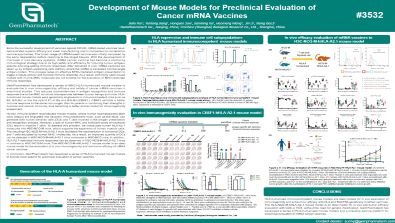

Since the successful development of vaccines against COVID, mRNA-based vaccines have demonstrated superior efficacy and lower manufacturing cost in comparison to conventional vaccine approaches. The broad usage of mRNA-based vaccine was initially hampered by the early degradation before reaching to the target tissues. With the development of improved in vivo delivery systems, mRNA cancer vaccine has become a promising immunological strategy due to its high safety and efficiency for inducing tumour antigen-specific and long-lasting immune responses. After delivered in vivo, mRNA vaccines are taken up by antigen-presenting cells (APCs), where the mRNA is translated into the target antigen protein. This process relies on effective MHC-mediated antigen presentation to trigger a robust cellular and humoral immune response. As a result, commonly used mouse models with murine MHC molecules are not suitable for the evaluation of MHC-restricted immune responses.
Recommended for You
More infomation about blogs




Find Models



Submit Inquiry
Contact Us
Schedule a Meeting
Let us know which event you're attending and we'd be happy to connect with you.
Download
Download
Watch On-Demand Webinar
Newsletter Signup

We value your privacy
This website will store cookies on your computer. These cookies are used to collect information about how you interact with this website and enable us to remember you. We use this information to improve and customize your browsing experience, as well as to analyze and collect relevant data and metrics about visitors on this website and other platforms. For more information about the cookies we use, please refer to our privacy policy
If you decline, your information will not be tracked when visiting this website. A cookie will be used in your browser to remember your preference settings that you have not accepted.