
Establishment and Pharmacological Evaluation of Two Temporal UVB-Induced CLE Models in Trex1 KO Mice via cGAS-STING/Type I IFN Pathway
June 15, 2026


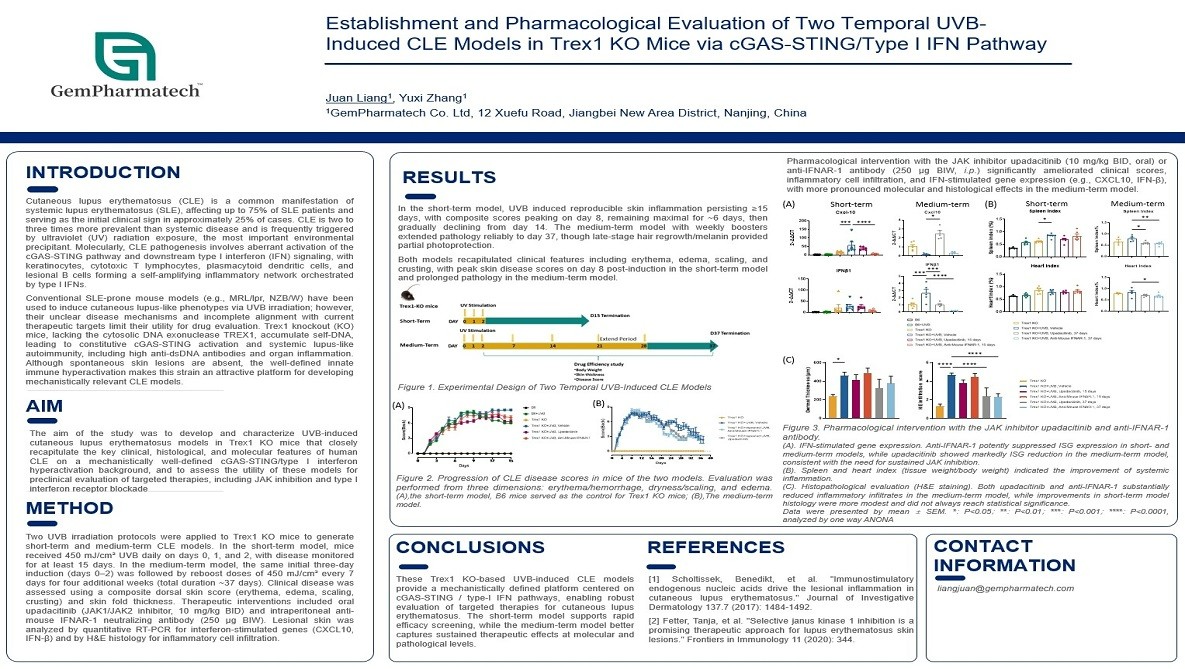
Establishment and Pharmacological Evaluation of Two Temporal UVB-Induced CLE Models in Trex1 KO Mice via cGAS-STING/Type I IFN Pathway
Cutaneous lupus erythematosus (CLE) is a frequent manifestation of systemic lupus erythematosus, affecting up to 75% of patients and is often triggered by ultraviolet (UV) exposure. Its pathogenesis is driven by aberrant activation of the cGAS–STING pathway and sustained type I interferon signaling, involving keratinocytes, immune cells, and an amplifying inflammatory loop in lesional skin.
Trex1 knockout mice, characterized by constitutive cGAS–STING activation due to cytosolic DNA accumulation, provide a mechanistically defined platform for modeling lupus-like inflammation. When combined with UVB irradiation, these mice enable a robust CLE model. This system supports both rapid and sustained evaluation of therapeutics targeting type I interferon–driven skin inflammation.
Download
Trex1 knockout mice, characterized by constitutive cGAS–STING activation due to cytosolic DNA accumulation, provide a mechanistically defined platform for modeling lupus-like inflammation. When combined with UVB irradiation, these mice enable a robust CLE model. This system supports both rapid and sustained evaluation of therapeutics targeting type I interferon–driven skin inflammation.
Previous:N/A